
A Strong Community Shares Responsibly: Before Forwarding the Next Message
How to share updates, photos and personal experience without spreading rumours or exposing unnecessary information about community members.
Content credit: Dor Ben Hamo — Shooting Instructor
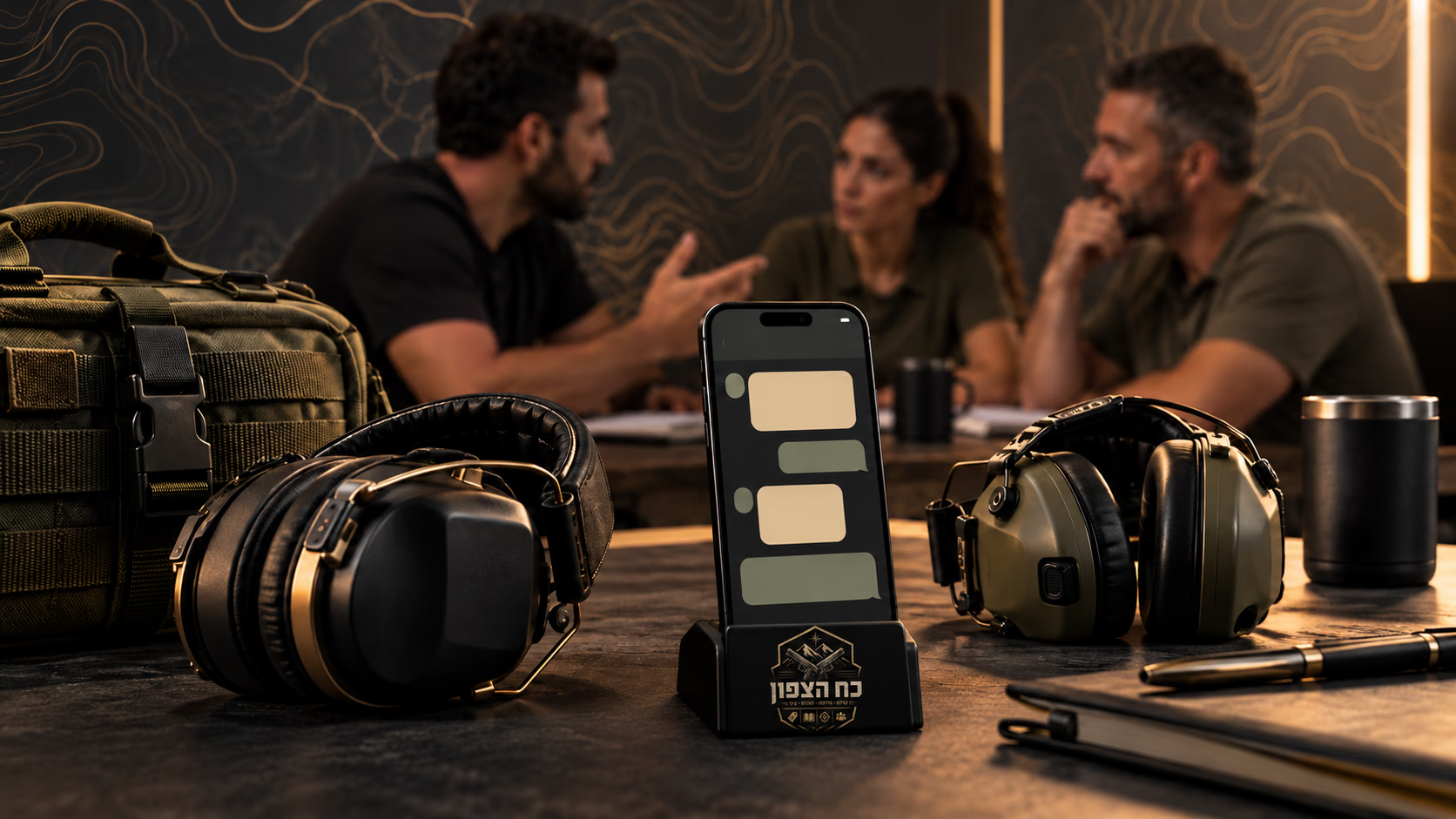
Credit: Koach Hatzafon — original article illustration
Verification, privacy and context — habits that help a community of Licensed Firearm Owners remain a useful and reliable source.
In an active group, a message can reach dozens of people within minutes. That is valuable when a reliable update needs to be shared, and it is also a reason to pause before pressing “Forward”. In a community of Licensed Firearm Owners, information may affect other people's decisions. The source, timing and personal details a message reveals therefore matter just as much as its content.
The following rules are suggested as community habits. They are not presented as regulations already adopted by Koach Hatzafon, and they do not replace official guidance or contacting emergency services when required.
Preserve the Difference Between an Update and a Rumour
Before forwarding a message, ask whether you can identify who published it and when. A screenshot with no date can bring an old message back to life. Saying that something “came from someone who knows” does not make it possible to verify the source, even when you know and trust the person who sent it to you.
It is better to share a link to the original publication with a short sentence explaining why it is relevant. When there is no source that can be checked, do not turn the message into a fact by adding a definitive headline. Israel's National Cyber Directorate publishes a dedicated guide to identifying false information following its circulation online and in messaging groups. National Cyber Directorate guide to identifying false information.
A Group Photo Requires Individual Attention
A photo from a training session can convey professionalism, friendship and activity. Before publishing it, make sure the people shown know where it is expected to appear and agree to that use. Consent to a photo for a personal memory is not necessarily consent to public distribution on a website or social media.
Check the background as well: documents, contact details, vehicle registration numbers, name badges and screens may appear unintentionally. Our editorial recommendation is to publish only the details needed to tell the story and to avoid exposing access methods, licensing documents or storage arrangements. This is a practical way to reduce exposure, not a statement that publishing every such detail is prohibited in all circumstances.

Before sharing, check the details visible in the background. Illustrative image.
Location and Habits Are Not Always Part of the Story
You can share the atmosphere of an event without describing personal travel routes, home addresses or participants' regular habits. Before tagging a person or location, ask whether the information is necessary and whether the other person wants it shared. Even in a closed group, there is no complete control over screenshots or further forwarding.
This distinction is especially useful when publishing an activity summary: you can describe what was learned, thank the team and show agreed photographs without turning the post into a list of personal details about those present.
Personal Experience Should Remain Labelled as Personal Experience
A member may share that a product was comfortable for them or that a particular process unfolded in a certain way. This can help others ask questions, but it does not guarantee the same result. State when the experience took place and which model or service it concerns, and avoid unsupported generalisations.
If the recommendation is commercial and there is a relationship with the supplier, disclosing that relationship helps readers understand the context. Clear disclosure builds trust and reduces the need to guess what lies behind the recommendation.
Correct the Information Where the Error Was Shared
If you shared information that later proved incorrect, send a clear correction to the same group together with the updated source. Deletion alone does not ensure that people who already read it will understand that the information changed. A lengthy apology is unnecessary; what matters is that readers can identify which claim was corrected and what is now known.
A Short Check Before Sending
- Is there a source and date that can be verified?
- Is it clear what is fact and what is personal impression?
- Does it include people or details that should not be exposed?
- Does the message add useful knowledge to the group?
The quality of a community is also evident in its ability to pause, verify and correct. Responsible sharing leaves room for friendship and open discussion while helping members know that the information they receive deserves their attention.
This content is intended for general information and does not replace certified instruction, manufacturers' instructions, official guidance or relevant professional advice.
Written by
dor-ben-hamo
Related posts

Hammer-Fired or Striker-Fired — What Is the Difference Between Common Handgun Actions?
A professional comparison of hammer-fired and striker-fired pistols, focusing on operating feel, consistency, maintenance and training.
Read more
Handgun Glossary — The Complete Guide for Firearm Licence Holders
Barrel, slide, grip, magazine, and front and rear sights: a clear glossary that helps identify parts, read manufacturers' instructions and communicate precisely with professionals.
Read more
Single Action, Double Action and Striker-Fired — How Does a Pistol's Action Work?
A clear guide to the differences between common action types, what they mean for responsible use and the questions worth asking before choosing a firearm and training with it.
Read moreReady to grow?
Schedule a Call