
Hammer-Fired or Striker-Fired — What Is the Difference Between Common Handgun Actions?
A professional comparison of hammer-fired and striker-fired pistols, focusing on operating feel, consistency, maintenance and training.
Content credit: Dor Ben Hamo — Shooting Instructor
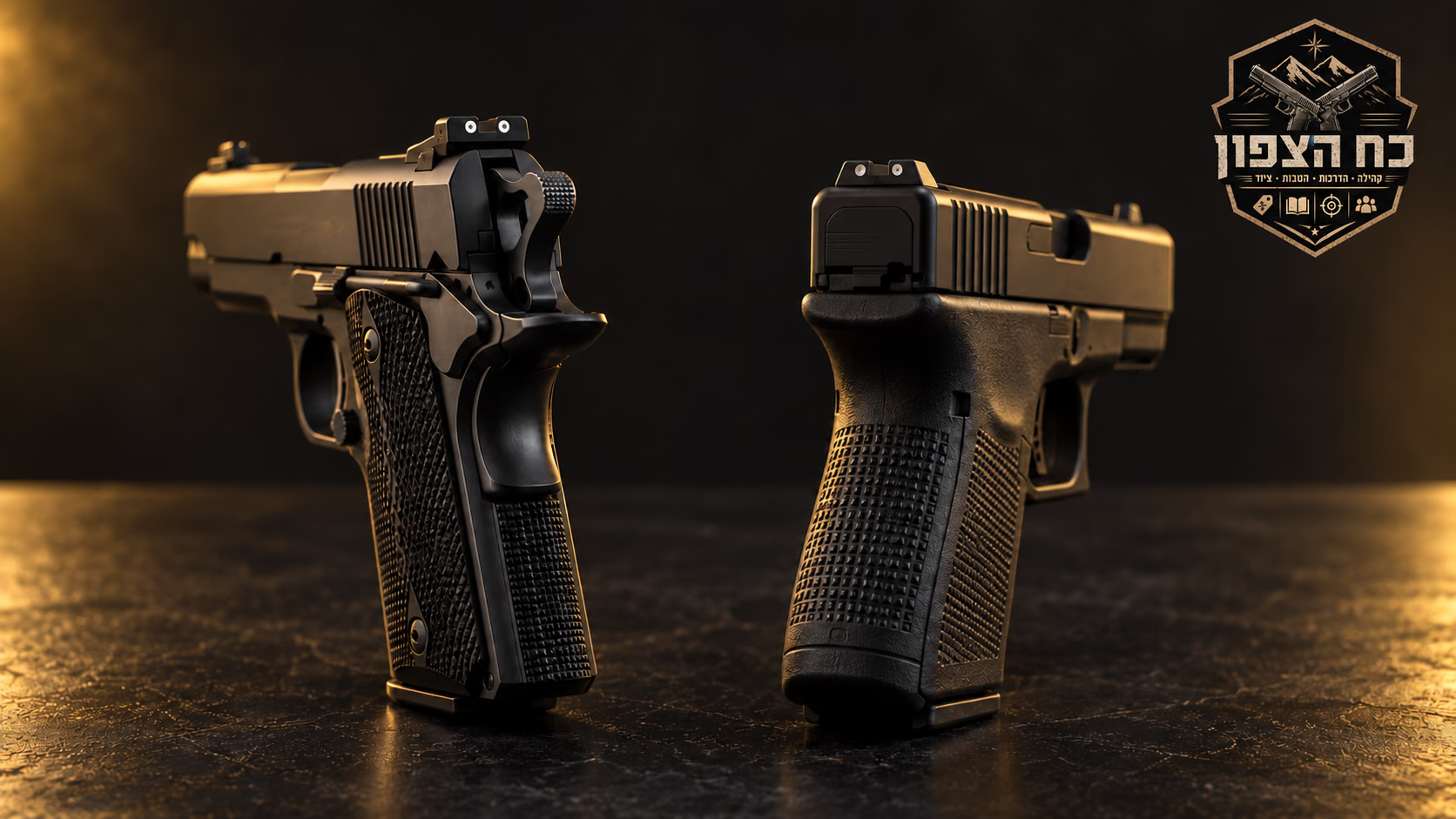
Credit: Koach Hatzafon — original article illustration
Original photograph and public-domain source.
Two Action Families, Not a Competition of Slogans
One of the prominent differences between modern pistols is the way the impact that begins the firing cycle is generated. On some models, a hammer — external or concealed — strikes a firing pin; on others, a striker is integrated into the operating mechanism. Both systems are established and proven, but they create a different user experience.
Hammer-Fired Action
On hammer-fired pistols, the hammer's condition can sometimes be seen or felt. They may operate in single action, double action or a DA/SA combination. DA/SA models generally have a clear difference between the first trigger press and those that follow. Some models include a decocking lever and others a manual safety — but do not generalise: the manufacturer's instructions are authoritative.
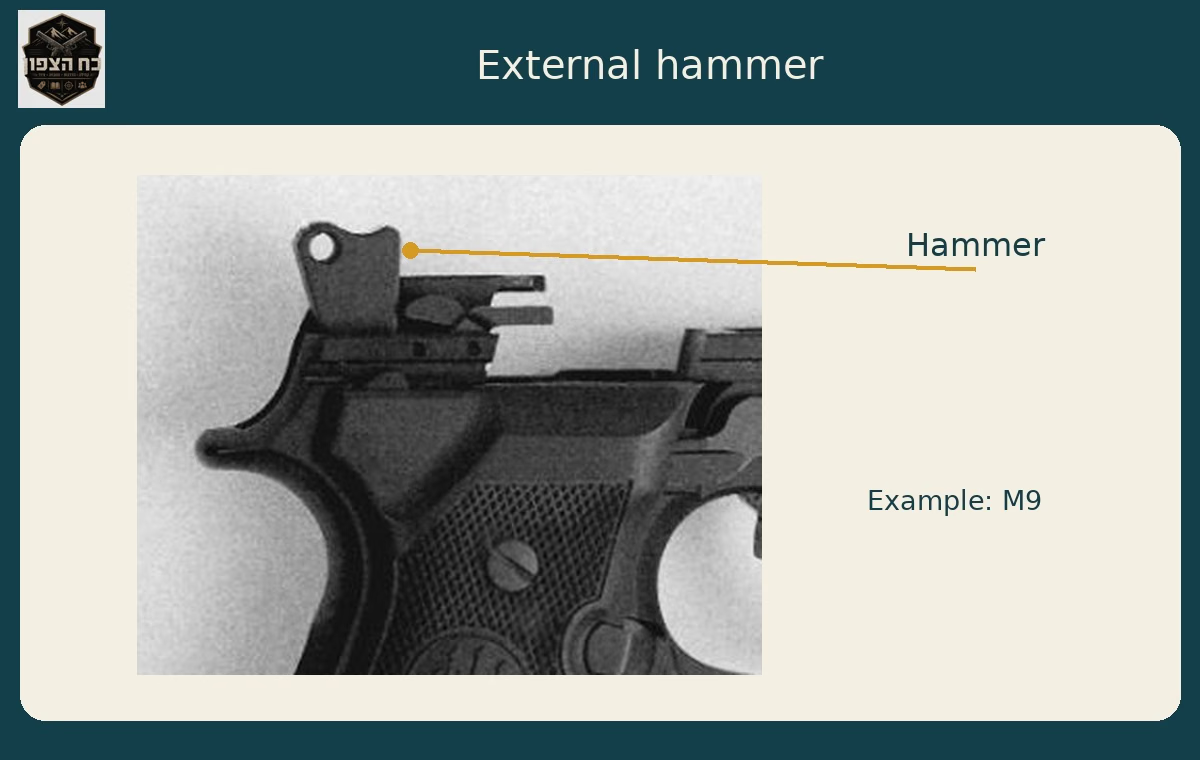
External hammer close-up from an M9 photograph. It identifies the part only; action designs and trigger modes vary between models.
Striker-Fired Action
In striker-fired pistols, a spring drives the striker without a separate hammer. The absence of a visible hammer is not sufficient to identify this system: some pistols have a concealed hammer. Many offer a relatively similar trigger feel from one press to the next and fewer external controls. Visual simplicity does not remove the need for safety discipline: here too, the user must understand the safety mechanisms, the firearm's condition, and the permitted storage and carry procedures.
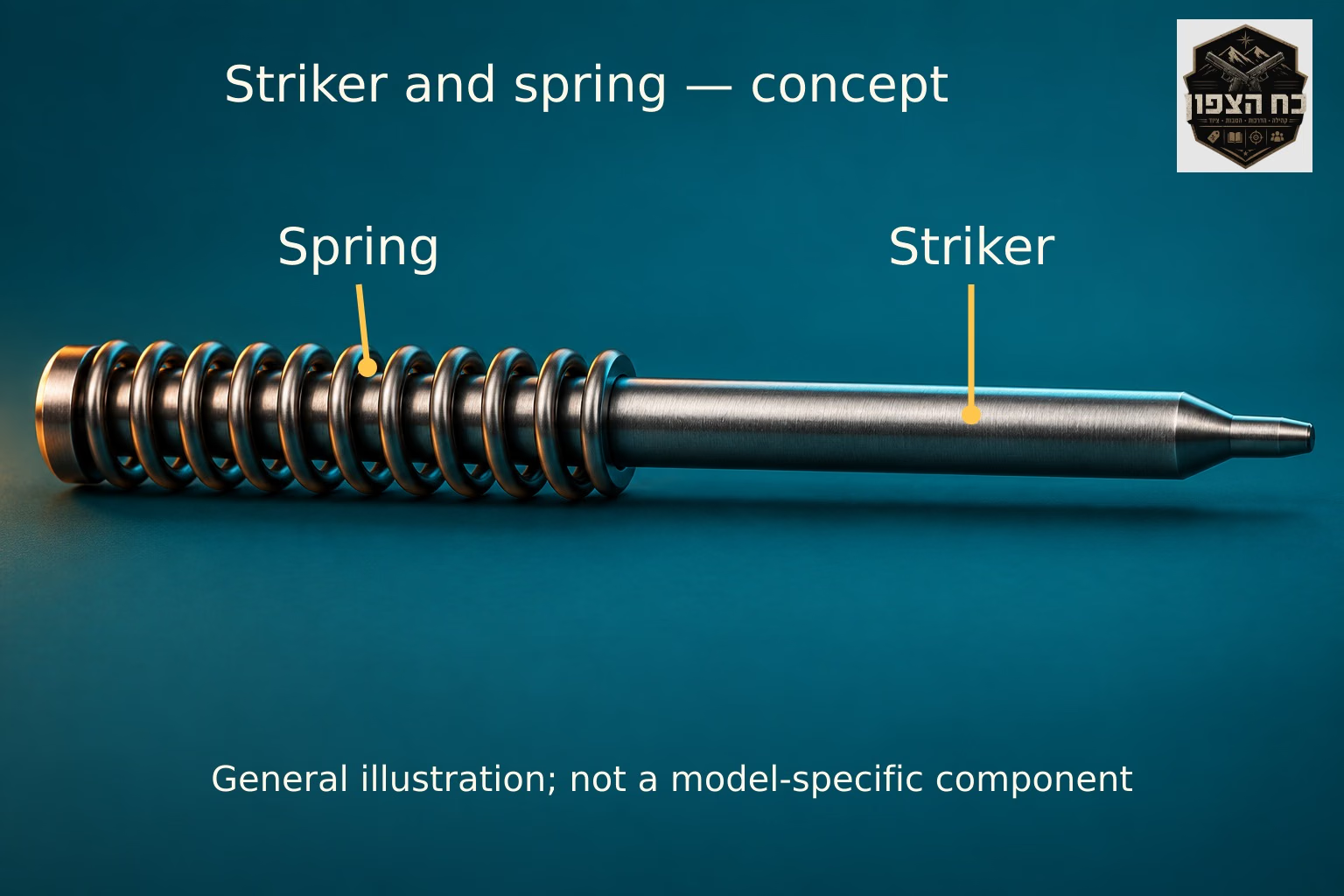
Striker and spring — an original concept illustration. Shapes are simplified for explanation; this is not a photograph of a model-specific component.
Photographed Examples
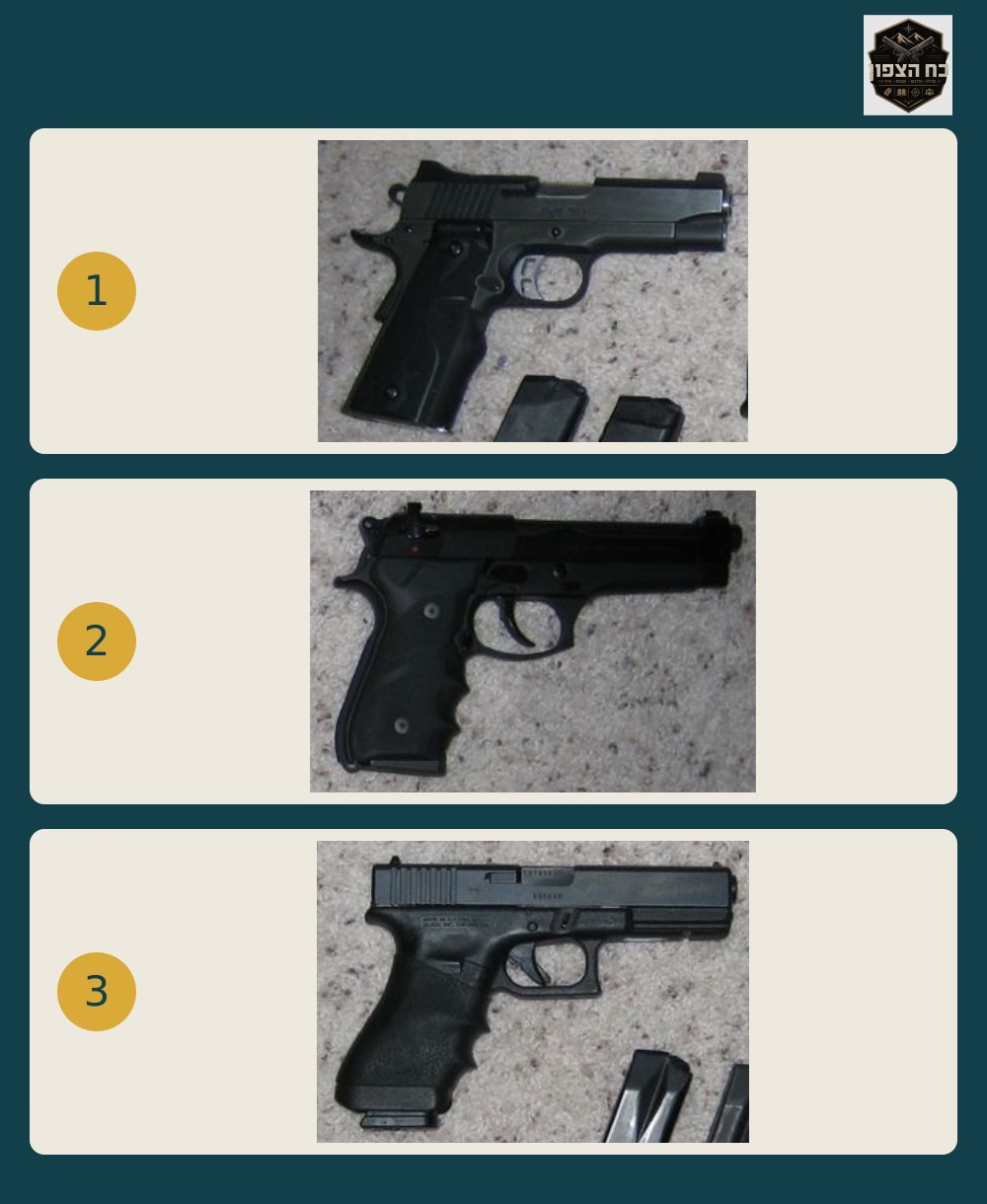

Three identified models for exterior comparison: 1 — Kimber Eclipse Pro II; 2 — Beretta 92FS Brigadier; 3 — Glock 22. The first two are hammer-fired and the third is striker-fired. The photograph shows exterior features, not internal assemblies.
Public-domain photograph source.

How Should They Be Compared?
A professional comparison is not limited to trigger weight or the number of components. It is important to assess the complete system:
- Hand fit and the ability to reach controls without changing grip in an unsafe way.
- Consistency of operation during structured training.
- Maintenance instructions, inspection intervals and the availability of qualified service.
- Compatibility of the holster and ancillary equipment with the exact model.
- The ability to understand the firearm's condition clearly at every stage.
The Choice Is Also a Training Programme
A mechanical difference quickly becomes a difference in habits. Anyone moving between systems must learn the operating routine of each one and not assume that a habit developed on one model automatically suits another. The responsible way to choose is to gain experience in an authorised setting, receive an explanation from a qualified instructor and follow the manufacturer's user manual.
פטיש ונוקר פנימי — ההבדל בתמונה
השוואה מושגית בין שתי משפחות המנגנונים הנפוצות.
Written by
dor-ben-hamo
Related posts
Handgun Glossary — The Complete Guide for Firearm Licence Holders
Barrel, slide, grip, magazine, and front and rear sights: a clear glossary that helps identify parts, read manufacturers' instructions and communicate precisely with professionals.
Read more
Single Action, Double Action and Striker-Fired — How Does a Pistol's Action Work?
A clear guide to the differences between common action types, what they mean for responsible use and the questions worth asking before choosing a firearm and training with it.
Read more
Rifle calibers: dimension tables, names and example rifles
Ten familiar rifle cartridges explained through C.I.P. dimension tables, full names, example rifles and illustrated comparisons.
Read moreReady to grow?
Schedule a Call