
Handgun Glossary — The Complete Guide for Firearm Licence Holders
Barrel, slide, grip, magazine, and front and rear sights: a clear glossary that helps identify parts, read manufacturers' instructions and communicate precisely with professionals.
Content credit: Dor Ben Hamo — Shooting Instructor
Credit: Koach Hatzafon — original article illustration
Original photograph and public-domain source.
Knowing the Terminology Is Part of Responsible Ownership
Part names may vary slightly between manufacturers and models. The firearm's user manual is the authoritative source; the following glossary is intended to provide a shared foundation for speaking with an instructor, a shooting range or a professional.
Barrel
The component that contains the chamber and through which the projectile travels. Never look into a barrel or handle it before completing the unloading and inspection procedure specified by the manufacturer and doing so in a safe environment.
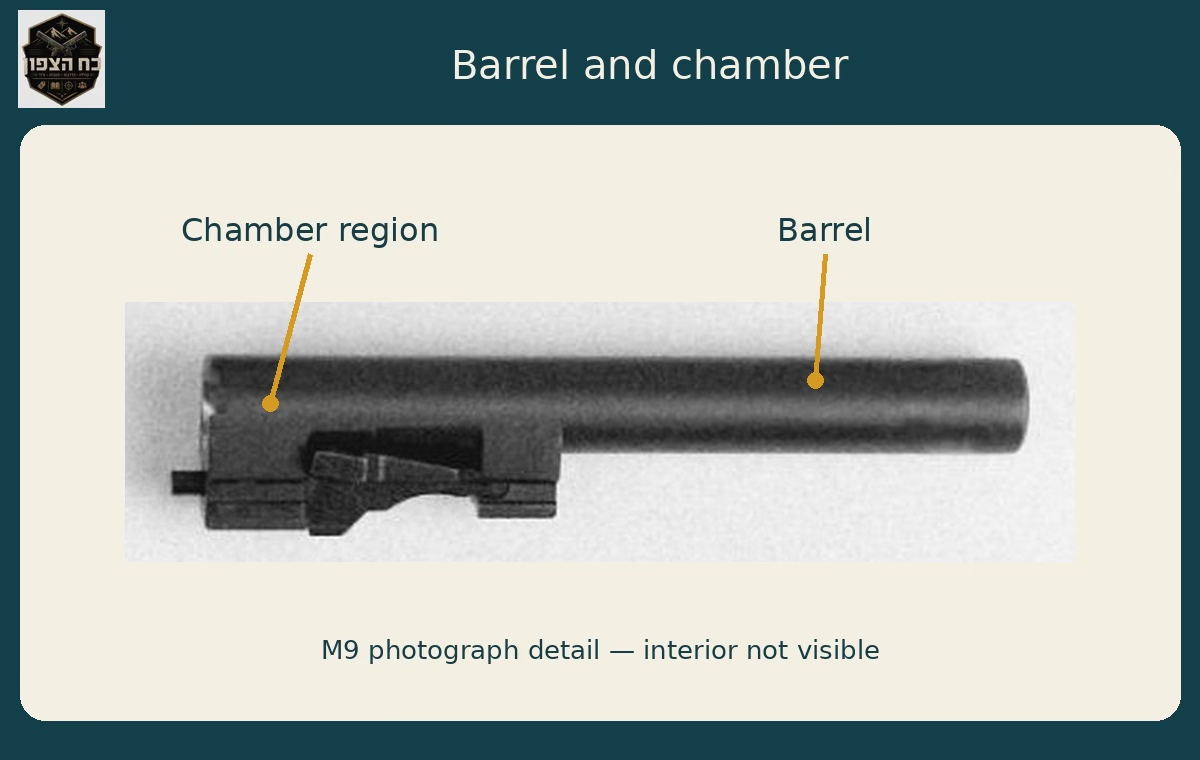
M9 barrel close-up: the arrow marks the chamber area; the internal chamber is not visible.
Chamber
The space at the rear of the barrel where the cartridge sits before firing. Checking the condition of the chamber is a central part of verifying the firearm's status.
Slide
The moving upper component on many semi-automatic pistols. It participates in the operating cycle and carries various components, depending on the model.
Frame
The main component on which the pistol's assemblies are mounted. Some models have a separate internal mechanism unit; consult the manufacturer's definition.
Grip
The part of the frame designed to be held by the hand. Its shape, texture and dimensions vary between models; on some pistols, grip panels or backstraps can be replaced in accordance with the manufacturer's instructions.
Trigger and Trigger Guard
The trigger activates the firing mechanism. The trigger guard protects it. A fundamental rule: keep your finger outside the trigger guard until you have decided to fire.
Hammer
An impact component found on certain models. It may be external or concealed and can operate in different configurations.
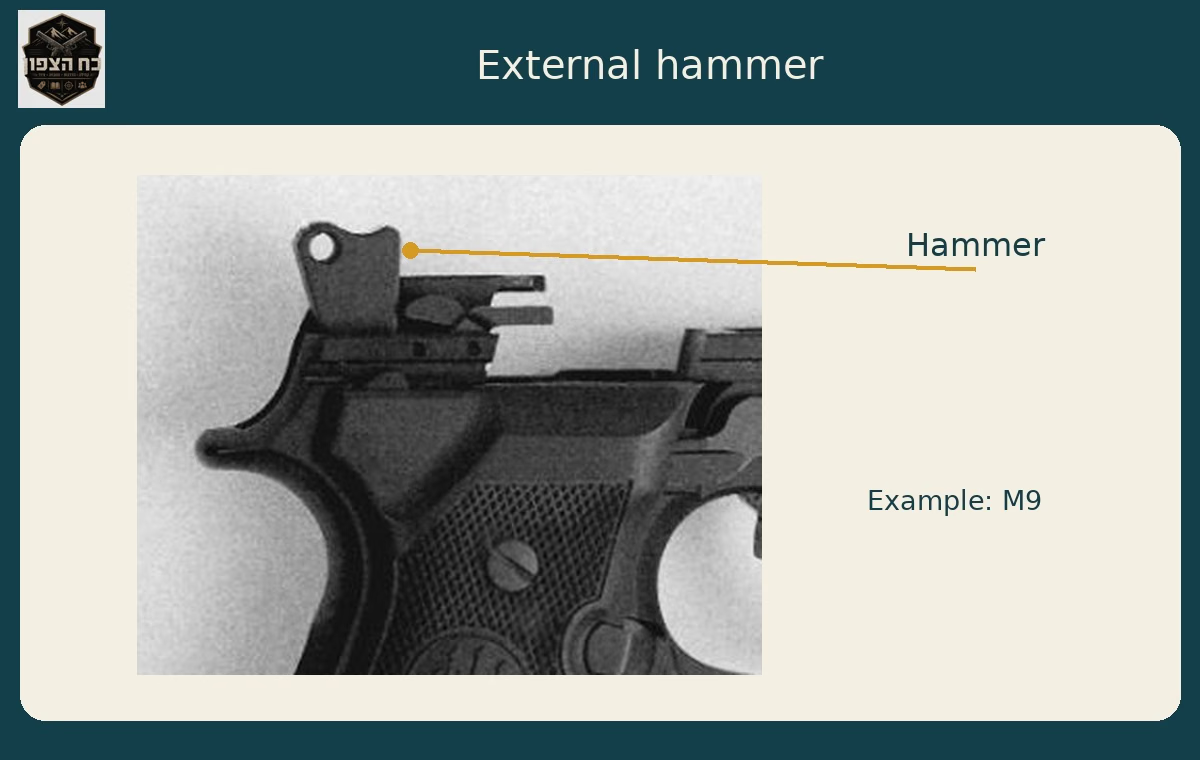
External hammer in an M9 photograph. Location and shape vary between models.
Firing Pin or Striker
The component that strikes the primer to initiate ignition. In a hammer-fired design, the hammer strikes the firing pin. In a striker-fired design, a spring drives the striker without a separate hammer. The absence of a visible hammer does not by itself identify the action type.
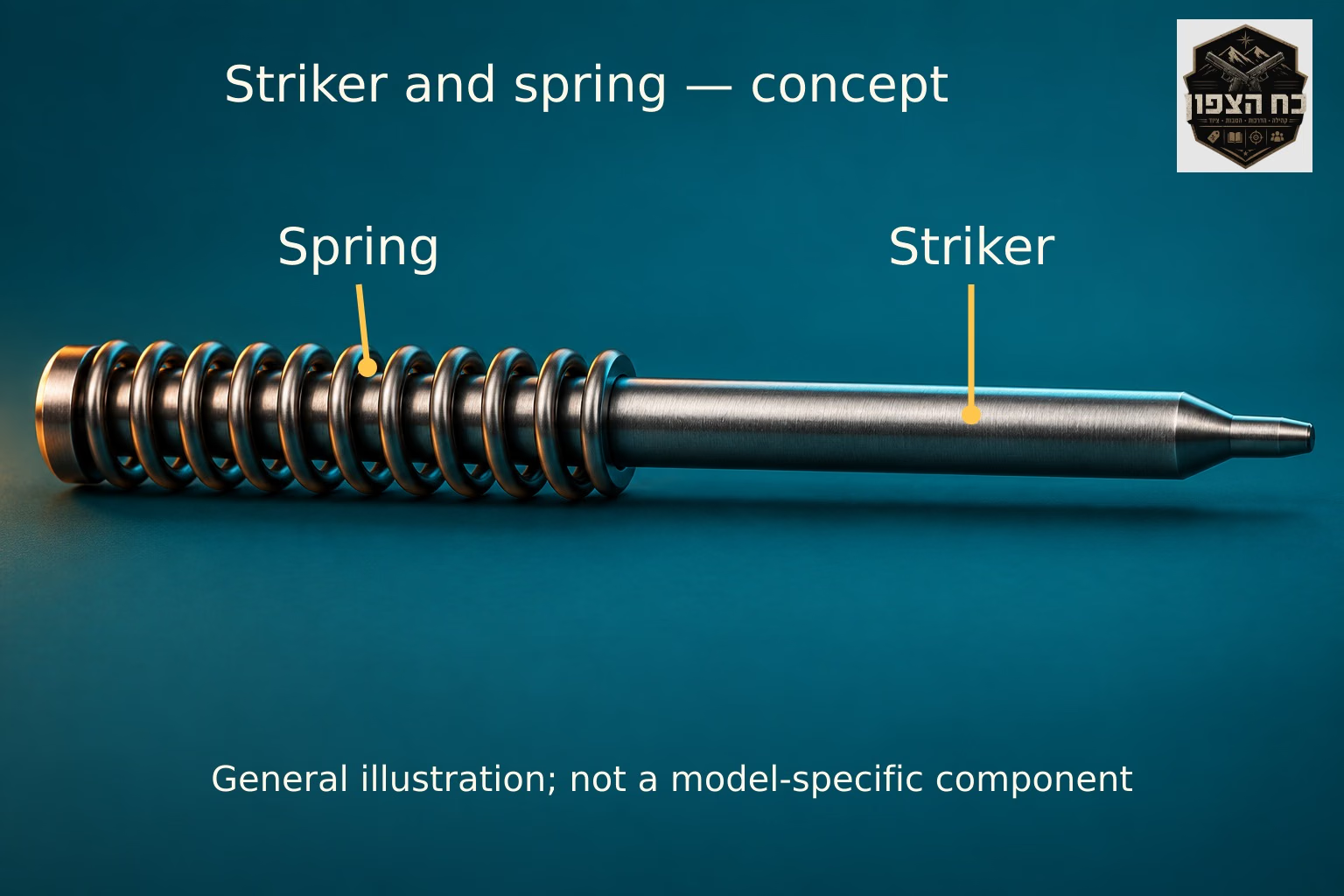
Striker and spring — an original concept illustration. Shapes are simplified for explanation; this is not a photograph of a model-specific component.
Magazine
A removable component that holds and feeds cartridges. Removing the magazine alone does not prove that the firearm is unloaded. The chamber must also be checked in accordance with the proper procedure.
Magazine Release
The control that releases the magazine. Its position on the left or right varies between models.
Slide Stop
A component used to hold or release the slide according to the firearm's design and condition. Do not assume that it works in the same way on every model.
Safety and Safety Mechanisms
Safety mechanisms may be manual or automatic, internal or external. A safety does not replace keeping the firearm pointed in a safe direction, trigger discipline or proper storage.
Sights
A system that helps aim the firearm at a target. Iron sights and different types of red-dot sights are available; selection and installation should suit the model and be carried out with professional guidance.
Front Sight (Blade)
The sight near the muzzle, separate from the rear sight nearer the shooter. Its shape and mounting depend on the model.
Rear Sight (Notch)
The sight component at the rear of the pistol, generally mounted in a dedicated position on the slide. Its shape varies between models. Do not confuse it with the front sight or a red-dot sight.
Malfunction
A condition in which the operating cycle is not completed as expected, for example a feeding or extraction interruption. Running out of ammunition is not in itself a mechanical malfunction. Follow the instructor’s commands and range procedures; do not improvise a remedy.
Rifling
A spiral pattern on the inside wall of the barrel that spins the projectile to help stabilize its flight. Designs include lands and grooves as well as polygonal profiles; barrel interiors are not all alike. SAAMI definition.
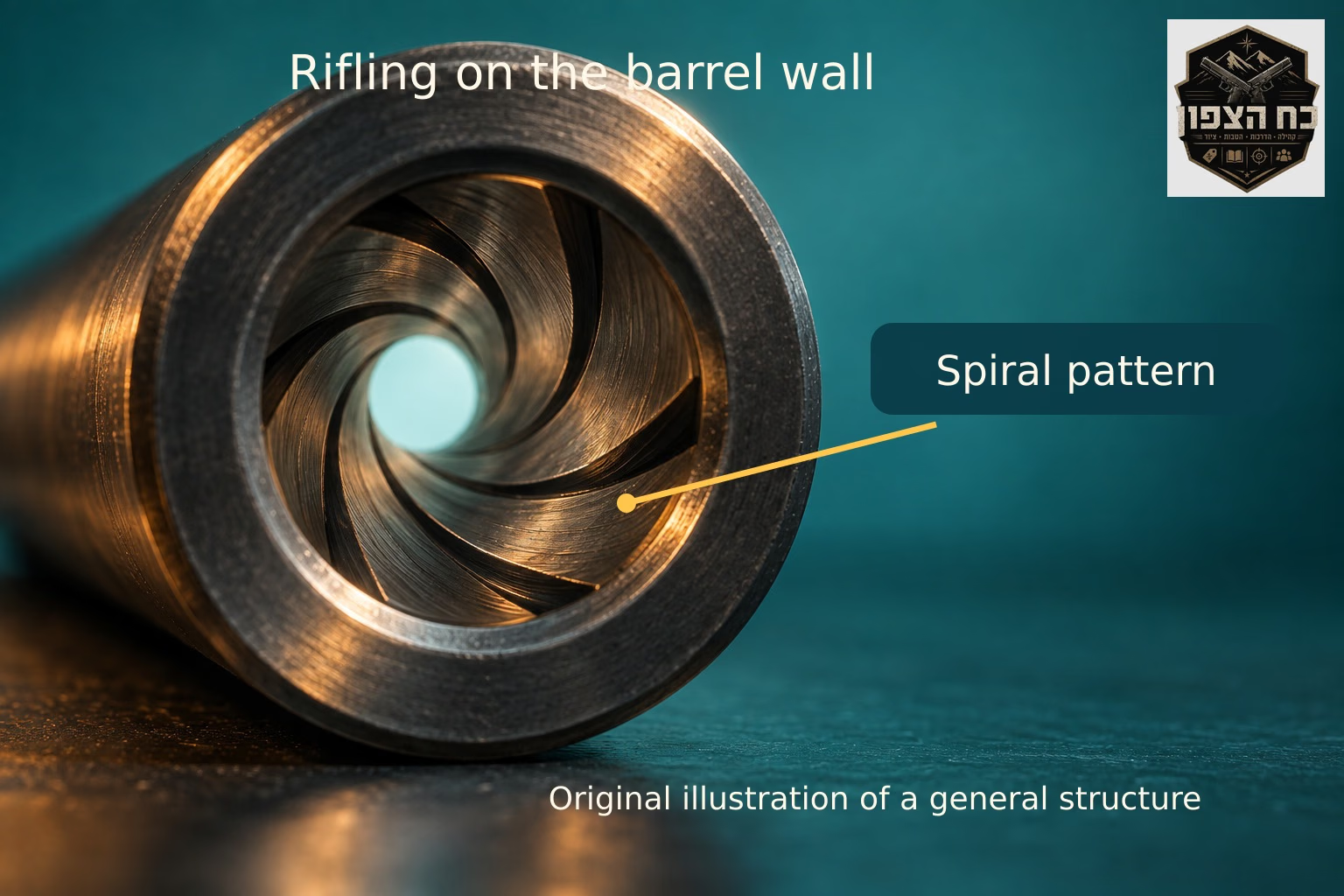
The spiral pattern on the barrel wall, with the relevant area marked. Original illustration of a general structure, not a photograph or section of a specific model.
Feed Ramp
An inclined surface that helps guide a cartridge from the magazine toward the chamber. Its location and shape depend on the design. The ramp is a guiding surface, not the chamber itself.
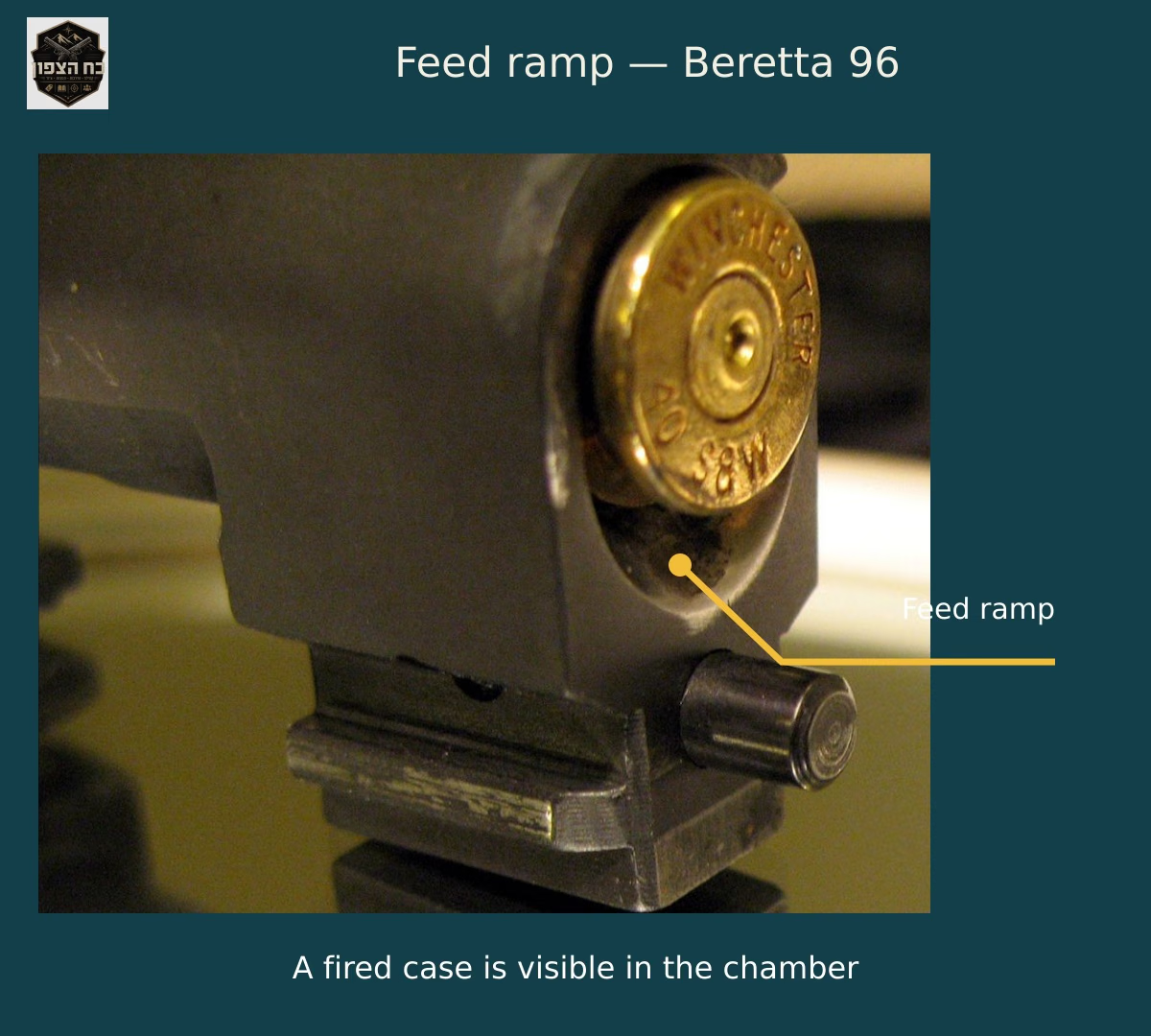
Feed ramp on a Beretta 96 barrel, below the fired case visible in the chamber. This is an identified-model close-up; designs differ between models.
Public-domain photograph source.
Recoil Spring
A spring, or spring-and-guide assembly, that helps return the slide forward during the operating cycle. On many pistols it sits below the barrel. Replacement parts must be expressly compatible with the model.
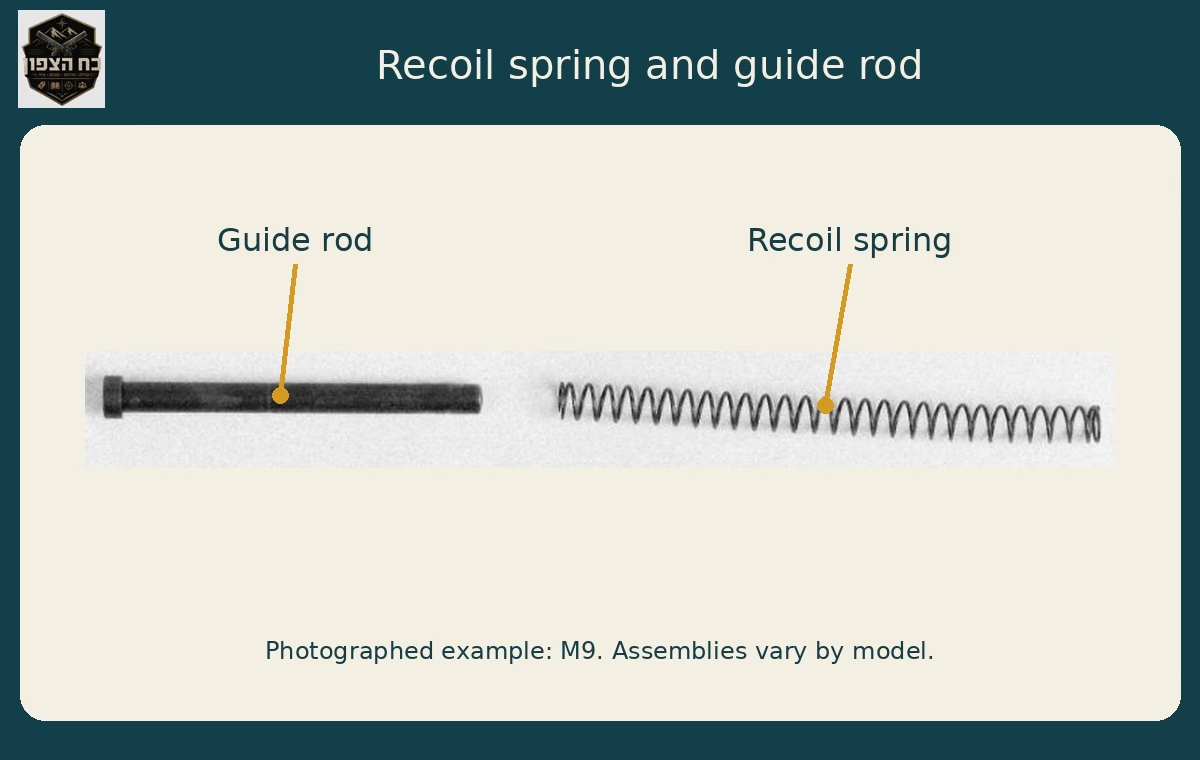
Guide rod and recoil spring in an M9 photograph, for identification only.
Firing-Pin Safety
An internal safety found in some pistols that blocks unwanted firing-pin movement. The component’s shape varies by model. Manufacturer’s explanation.
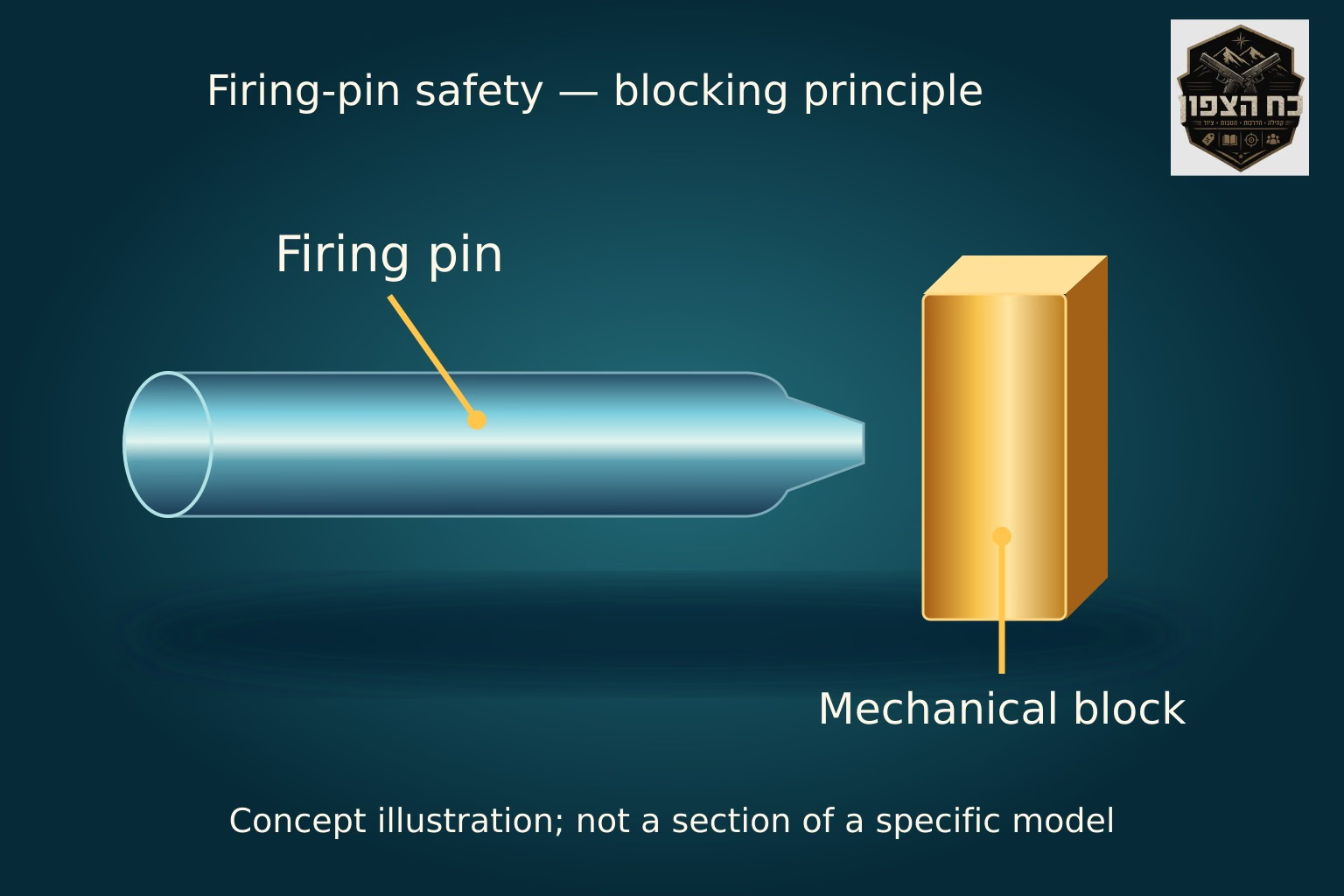


The yellow block illustrates mechanical obstruction of firing-pin movement. This is a conceptual diagram; component shape and placement vary by model.
Sources for Identifying Parts
- SAAMI — chamber.
- SAAMI — firing pin.
- GLOCK user manuals. Manufacturer diagrams apply to their specified models.
Summary
These terms help you ask better questions and read instructions correctly. They do not replace practical instruction. Whenever in doubt, stop, follow the safety rules and consult an instructor or a qualified armourer.
הכירו את חלקי האקדח
תרשימים חזותיים שמחברים בין שם החלק, מיקומו ותפקידו הכללי.
Written by
dor-ben-hamo
Related posts
Hammer-Fired or Striker-Fired — What Is the Difference Between Common Handgun Actions?
A professional comparison of hammer-fired and striker-fired pistols, focusing on operating feel, consistency, maintenance and training.
Read more
Single Action, Double Action and Striker-Fired — How Does a Pistol's Action Work?
A clear guide to the differences between common action types, what they mean for responsible use and the questions worth asking before choosing a firearm and training with it.
Read more
Rifle calibers: dimension tables, names and example rifles
Ten familiar rifle cartridges explained through C.I.P. dimension tables, full names, example rifles and illustrated comparisons.
Read moreReady to grow?
Schedule a Call