
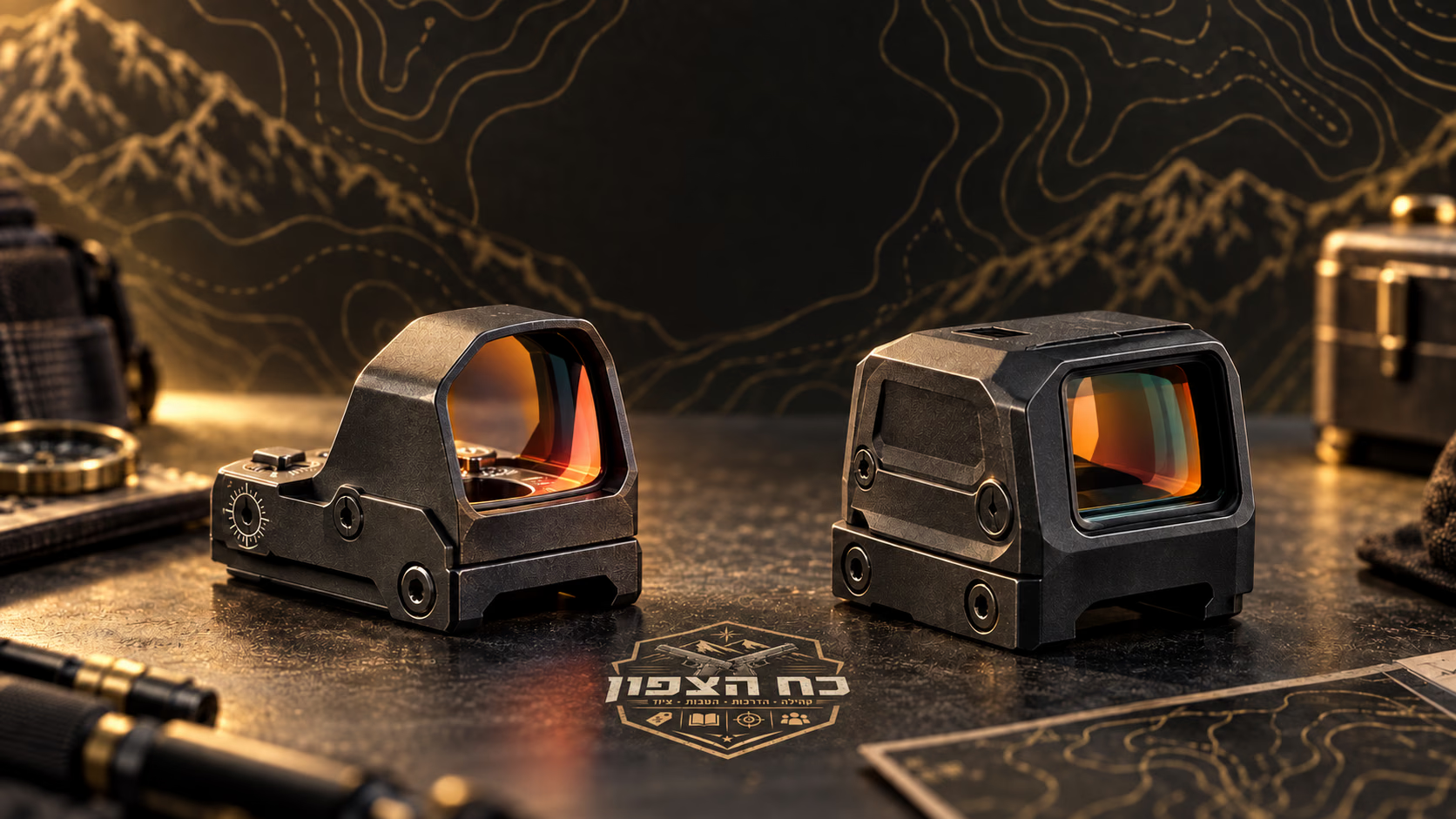
Pistol Red-Dot Sight Glossary: Reticle, MOA, Open and Enclosed Emitters
The differences between a reticle, MOA, open and enclosed construction, a solar panel and MRS — and the questions worth asking before choosing a red-dot sight for a pistol.
Content credit: Dor Ben Hamo — Shooting Instructor
Credit: Koach Hatzafon — original article illustration
Before We Begin: What Is a Red-Dot Sight?
A red-dot sight is an electronic optical system that displays an illuminated marking — usually a dot, circle or a combination of the two — on a transparent window. Terms in specifications may look similar across manufacturers, but they do not always describe precisely the same feature. This guide is intended to help readers interpret specifications and compare products, not replace professional fitting, checking manufacturers' instructions or qualified instruction.
Important: compatibility with the pistol, installation, function checks and use must follow the manufacturer's instructions and be carried out with the assistance of a qualified professional. This article does not provide shooting or installation instructions.
Reticle — the Marking Seen in the Window
The reticle is the illuminated shape the user sees through the sight. In pistol red-dot sights, it may appear as a dot alone, a circle, a circle with a dot, or another pattern defined by the manufacturer.
When reading a specification, check:
- The reticle's shape and colour.
- Whether there is one fixed shape or several options.
- Which brightness levels are available.
- Whether modes are available for different lighting conditions.
- Whether the manufacturer addresses astigmatism or recommends checking the display in person.
Preference for a particular reticle is personal. A product photograph does not always show how the marking will actually appear to the eye, so it is better to view the model itself before purchasing.
MOA — an Angular Unit, Not a Measure of Quality
MOA stands for Minute of Angle — one sixtieth of a degree. In red-dot sights, the figure usually describes the angular size of the dot or another element of the reticle.
The smaller the dot's MOA value, the smaller the visual area it covers at a given distance. A larger value produces a marking that appears larger and more prominent. There is no single value that is “best” for every person and purpose: the choice is affected by eyesight, lighting conditions, window size, reticle shape and personal preference.
It is important to distinguish between two uses of the term:
- Reticle size — for example, a dot of a stated size.
- Adjustment unit in the sight's mechanism — a separate technical figure in the manufacturer's specification.
Open-Emitter Sight
In an open-emitter design, the light source sits within the sight body but is not enclosed at the rear by an additional window. This generally results in a more compact and lighter structure, with an open viewing window and a smaller housing.
What to check in the specification:
- Dimensions and weight.
- Water and dust resistance according to the manufacturer's declaration.
- Housing design and window protection.
- Battery type and access.
- Warranty and service availability.
The structural limitation is that dirt, water or a foreign object may reach the light-source area or interfere with the projection path. The degree of impact varies according to the model and environment.
Enclosed-Emitter Sight
In an enclosed design, the light source sits in a sealed chamber between a front and rear window. Manufacturers present this structure as a way to protect the light source more effectively from rain, mud, dust and foreign objects.
The main benefit is improved environmental protection for the projection system. Conversely, an enclosed sight may be larger or heavier than a comparable open model and may sometimes require a dedicated mounting interface or adaptor.
Before choosing, check:
- Exact compatibility with the pistol model and mounting interface.
- Dimensions, height and weight.
- Sealing and durability ratings published by the manufacturer.
- Battery accessibility and warranty duration.
- Availability of parts, adaptors and service in Israel.
Solar Panel — Auxiliary Source, Backup or Automatic Control
Some models have a small photovoltaic cell on top of the sight. Its role is not identical in every product. Depending on the model, it may:
- Provide an alternative energy source under suitable light.
- Support the battery.
- Participate in automatic adjustment of reticle brightness.
The words “solar panel” alone are therefore insufficient. Check the model's instructions to determine whether the panel is a backup source, how automatic brightness mode works and what happens in low light. It does not remove the need for battery checks and maintenance in accordance with the manufacturer's instructions.
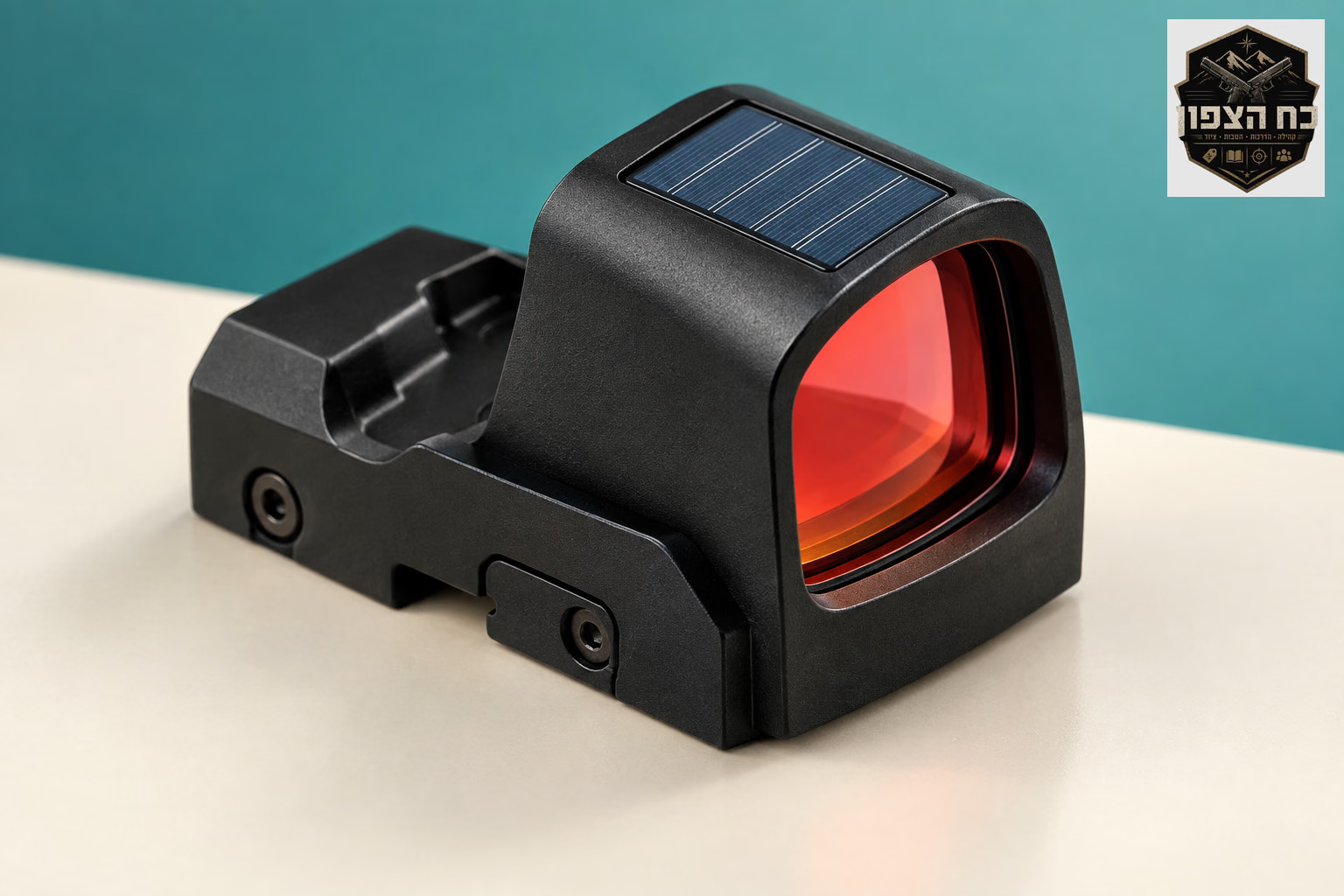
The blue surface on top illustrates a solar panel on an optic. Original generic illustration, not a product photograph or model specification; panel functions vary by model.
MRS — Multi-Reticle System
MRS generally stands for Multi-Reticle System. It is a trade name used by some manufacturers for a system that allows the user to choose between several reticle configurations in the same sight — for example a dot, a circle, or a circle-and-dot combination.
Important points:
- MRS is not a uniform industry standard.
- The number of options and their sizes vary between models.
- Not every model allows each element to be activated separately.
- Check the official specification to confirm which configurations are actually available.
Such a system provides flexibility, but it is not necessarily preferable for someone who wants a simple, fixed display.
Quick Comparison
Reticle — the shape of the illuminated marking.
Which shape and colour are comfortable for my eyes?
MOA — the angular size of a dot or reticle element.
Does the figure refer to reticle size or the adjustment mechanism?
Open emitter — a light source not enclosed in a complete chamber.
What level of protection and durability does the model provide?
Enclosed emitter — a light source inside a protected chamber.
Are the size, weight and interface suitable?
Solar panel — an auxiliary system whose role varies by model.
Is it a backup, a power source or brightness control?
MRS — several reticle configurations in one product.
Which configurations are available on the specific model?
Seven Checks Before Buying
- Compatibility — not merely “fits a pistol”, but an exact match for the model, cut and interface.
- Appearance to the eye — view the reticle in person, especially if astigmatism is present.
- Construction — open or enclosed, according to the environment of use and desired weight.
- Power source — battery type, battery access and the precise role of the solar panel.
- Durability — rely on official ratings and declarations, not general marketing language.
- Service and warranty — importer, warranty, spare parts and service times.
- Professional guidance — fitting and checking by a qualified professional and in accordance with the manufacturer's instructions.
The Bottom Line
An open-emitter sight is not “inferior”, and an enclosed-emitter sight is not always “superior”. A small dot is not necessarily more accurate for a particular user, and a solar panel does not guarantee battery-free operation under all conditions. The right choice begins with understanding the terms, continues with checking the specific model and ends with professional fitting and maintenance in accordance with the manufacturer's instructions.
Professional Sources
The explanations in this article are based on official technology descriptions from Holosun — MRS and Solar Failsafe, the description of the enclosed construction of the Aimpoint ACRO and the NSSF definition of Minute of Angle. Always check the manual for the specific model because capabilities vary between products and versions.
מילון חזותי: מבנה הכוונת והרטיקל
איורי הסבר והמחשות צבעוניות מקוריות של כוונות פתוחות וסגורות. לחצו על תמונה להגדלה. ההמחשות אינן מפרט של דגם מסחרי.
מילון כוונות חזותי
המחשה ברורה של כוונות ברזל, כוונת השלכה פתוחה וסגורה, רטיקל ו־MOA.
Written by
dor-ben-hamo
Related posts
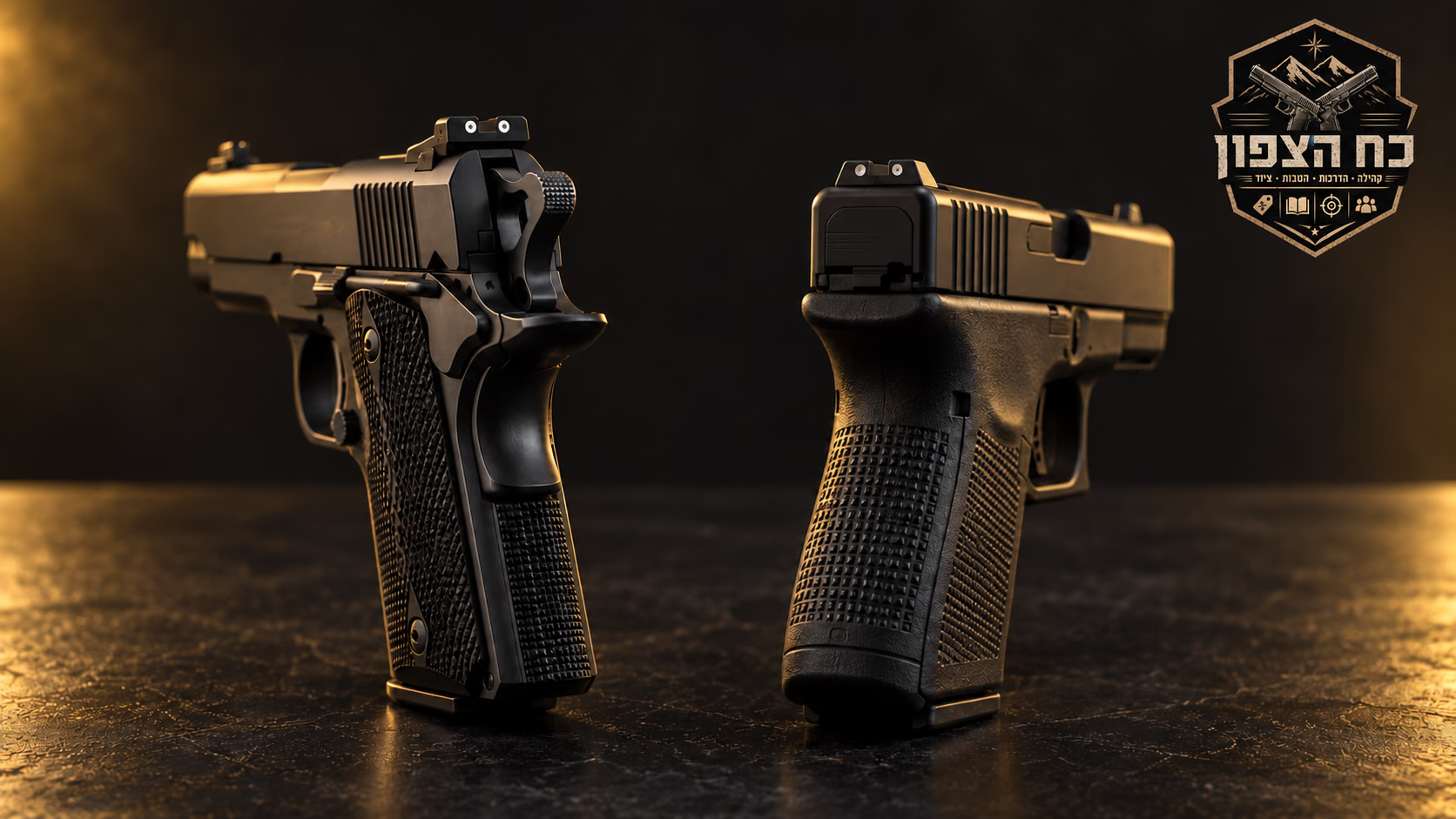
Hammer-Fired or Striker-Fired — What Is the Difference Between Common Handgun Actions?
A professional comparison of hammer-fired and striker-fired pistols, focusing on operating feel, consistency, maintenance and training.
Read more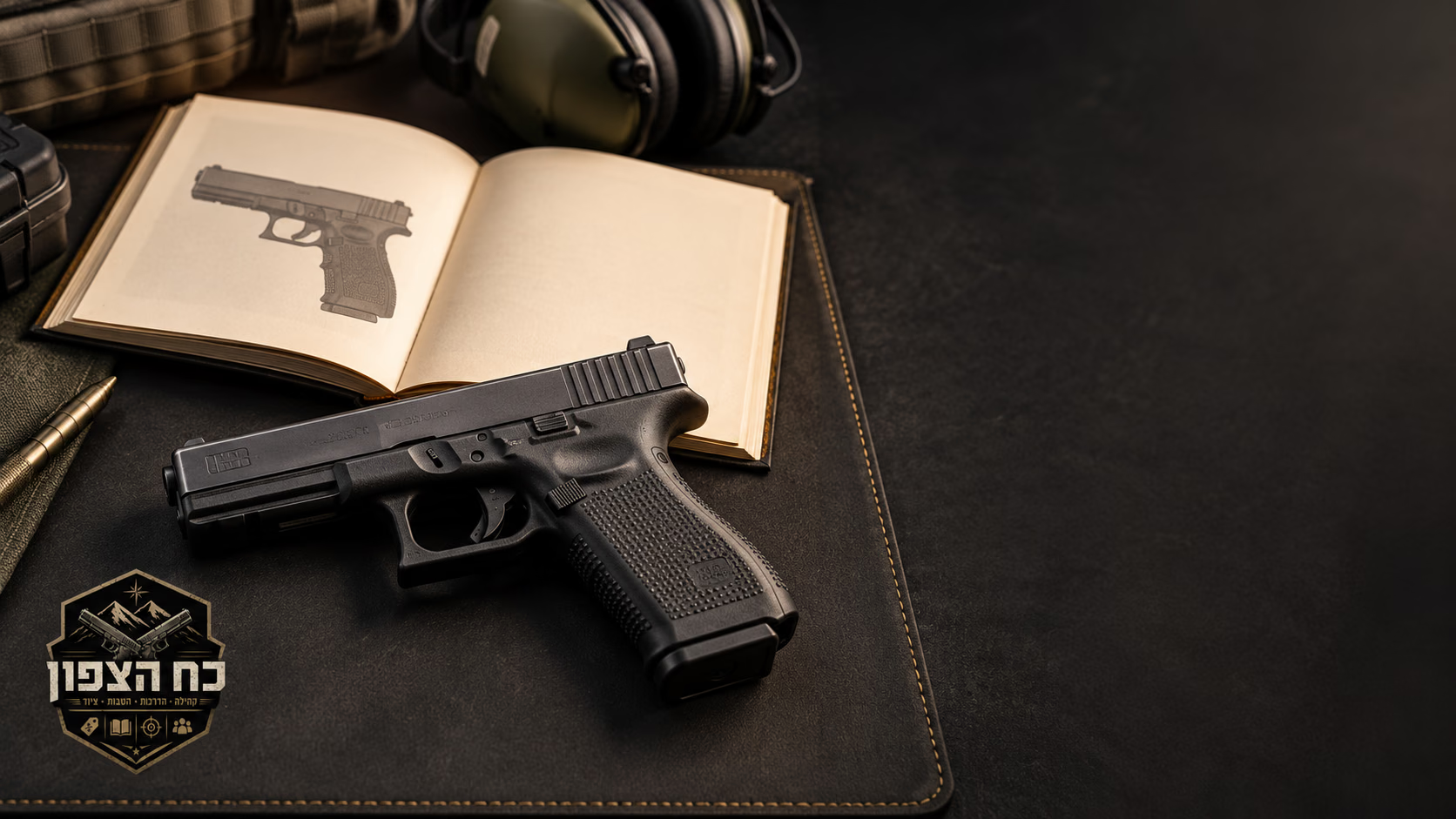
Handgun Glossary — The Complete Guide for Firearm Licence Holders
Barrel, slide, grip, magazine, and front and rear sights: a clear glossary that helps identify parts, read manufacturers' instructions and communicate precisely with professionals.
Read more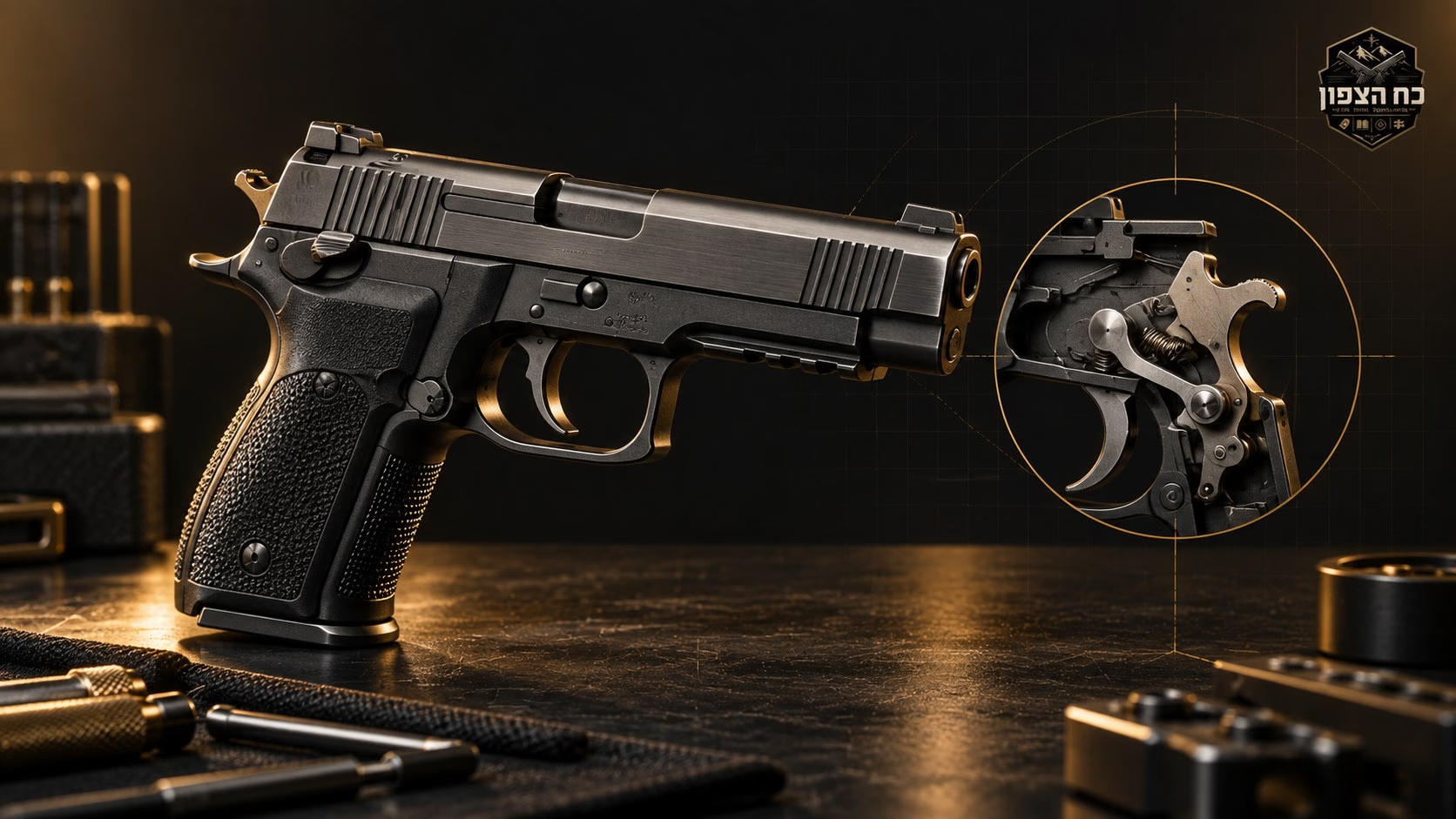
Single Action, Double Action and Striker-Fired — How Does a Pistol's Action Work?
A clear guide to the differences between common action types, what they mean for responsible use and the questions worth asking before choosing a firearm and training with it.
Read moreReady to grow?
Schedule a Call