
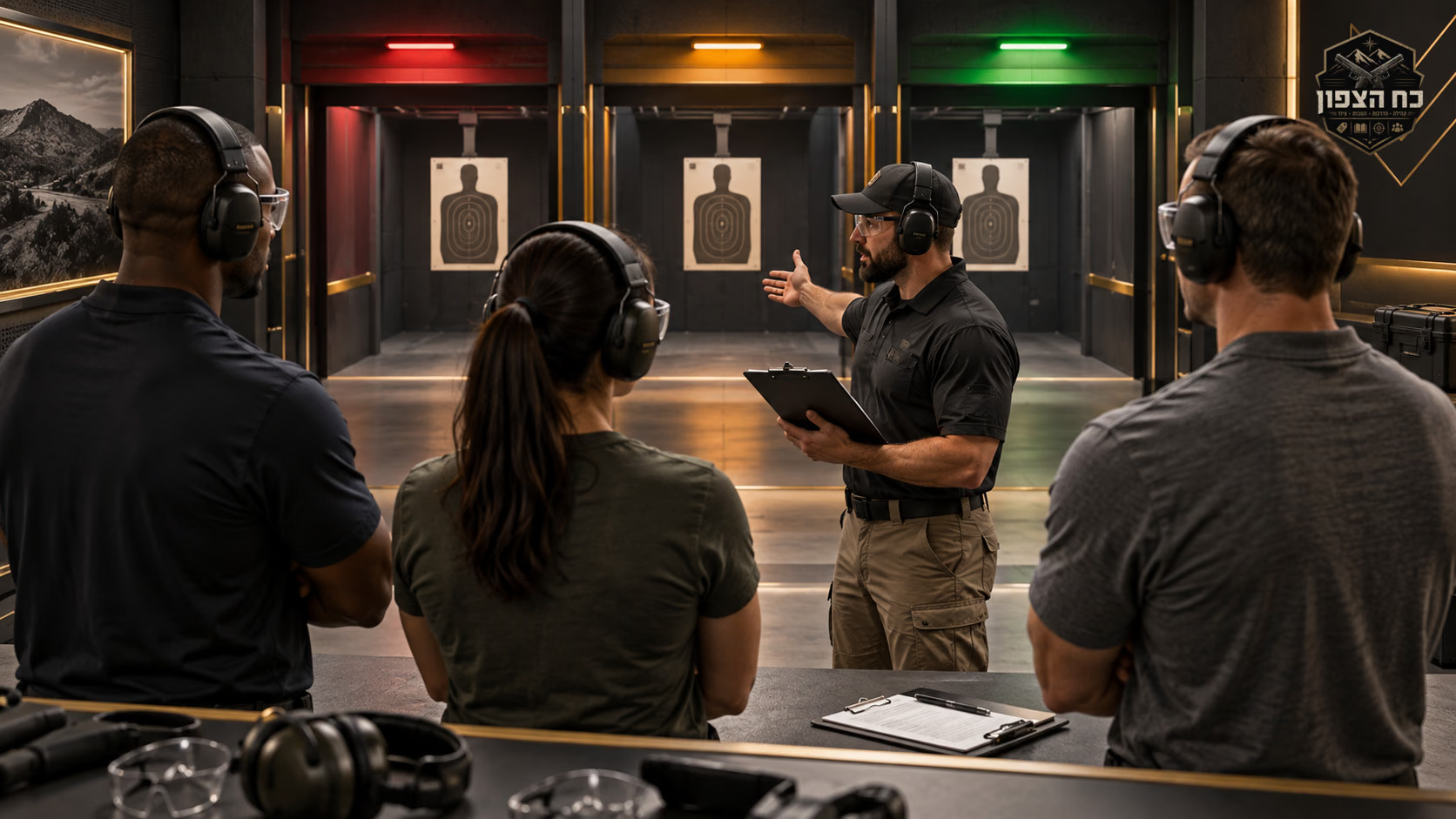
How to Build a Training Programme for Your Level
Beginners, progressing trainees and experienced participants do not need the same track. Here is how to define an objective, a baseline and safe, measurable progress.
Content credit: Dor Ben Hamo — Shooting Instructor
Credit: Koach Hatzafon — original article illustration
A Good Programme Begins with the Right Question
Not “Which training is the most advanced?”, but “What do I need to know and perform safely at the next stage?” The right programme matches the difficulty level to the trainee, builds fundamentals and defines clear conditions for progression.
Stage One: Current Position
Before registering or arranging private training, state which previous sessions you have completed, your experience level, the type of equipment and your objective. Within the traffic-light programme, it is important to report which stages have already been completed. Accurate information allows the team to assess suitability and eligibility requirements.
Stage Two: One Main Objective
Choose an objective that can be assessed: improving consistency, returning safely to the fundamentals after a break, becoming familiar with new equipment or preparing for a more advanced stage. Too many objectives in one session make both learning and debriefing more difficult.
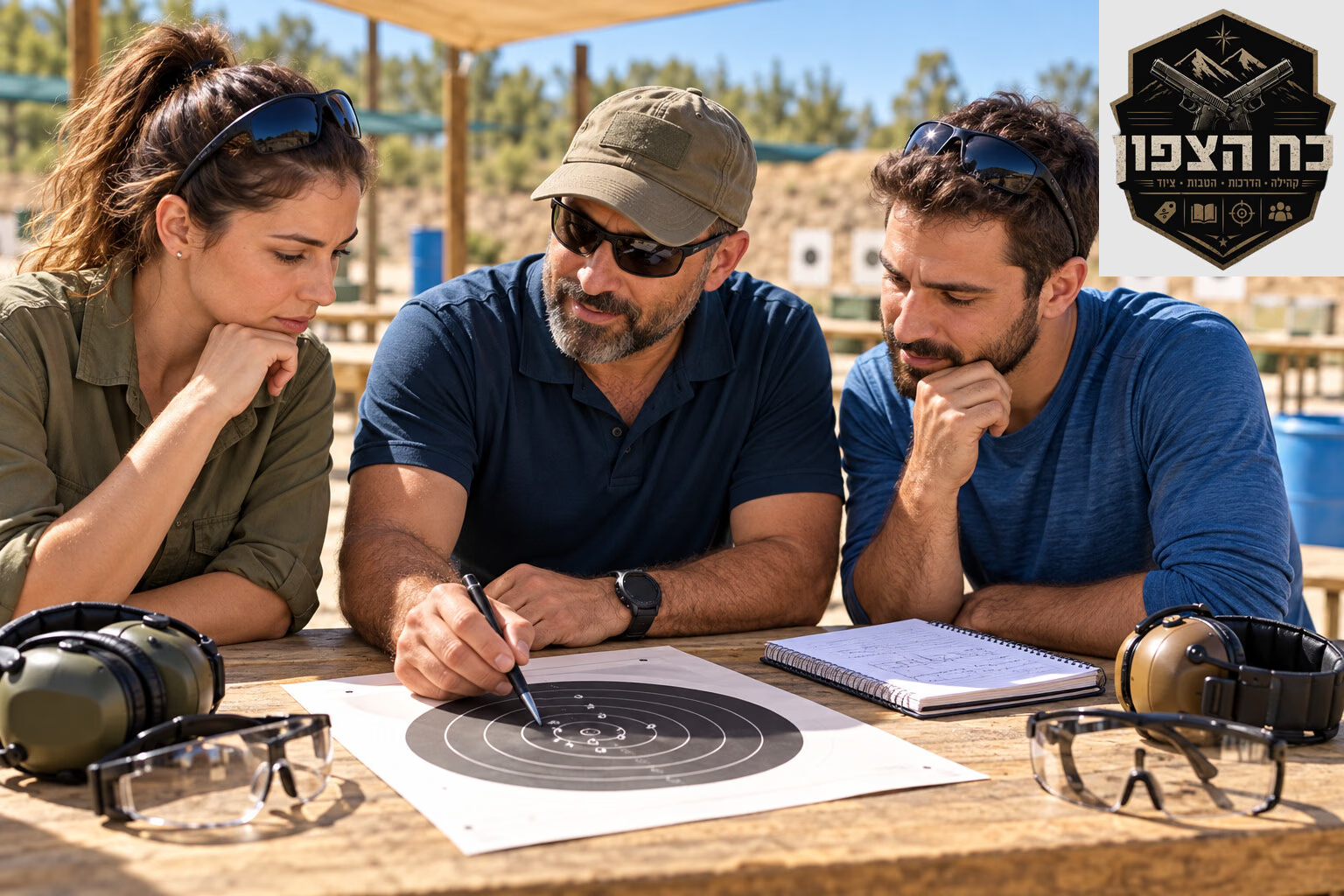
A personal goal guides the next training steps. Illustrative image.
Stage Three: A Baseline
Begin with a controlled, relatively simple performance under the instructor's guidance. The baseline is not a test of ego; it is a data point from which to build. If safety or the fundamentals are not stable, that is the point to work on.
Stage Four: Gradual Progression
Add difficulty only when current performance is consistent. The change may involve pace, distance, the number of decisions or exercise complexity — but not all of them at once. This makes it possible to understand what affected the result.
Stage Five: Measurement and Repetition
At the end, set two measures and an objective for the next session. At the next training session, first check what has been retained and only then move forward.
Who Is Private Training For?
Private training may suit a beginner who needs an individual pace, an experienced participant returning after a break, or someone with a precise objective. It is not a shortcut around eligibility requirements. Final suitability is assessed with the team and in accordance with the law, the shooting range's rules and the instructor's assessment.
Written by
dor-ben-hamo
Related posts
What Makes Shooting Training Professional?
Quality training is not measured only by the number of rounds. This is what clear objectives, safety, instruction, feedback and debriefing that create genuine progress look like.
Read more
The Post-Training Debrief — The Tool That Turns Experience into Progress
Five minutes of focused review can connect what happened today with the next training session. Here is how to do it without excuses or blame.
Read more
Not Just Hitting the Target — How Do You Measure Training Progress?
Accuracy matters, but it is only part of the picture. Measures of consistency, safety, pace and decision-making tell a more professional story.
Read moreReady to grow?
Schedule a Call