

Not Just Hitting the Target — How Do You Measure Training Progress?
Accuracy matters, but it is only part of the picture. Measures of consistency, safety, pace and decision-making tell a more professional story.
Content credit: Dor Ben Hamo — Shooting Instructor
Credit: Koach Hatzafon — original article illustration
One Result Does Not Tell the Whole Story
A hole in the centre of the target is a data point, but not necessarily proof of progress. To assess ability, examine a sequence of performances, the conditions in which they occurred and the quality of the process around them.
Accuracy
Accuracy describes proximity to the intended area. Measure it under conditions that are as consistent as possible: the same distance, the same target and the same instruction. Changing conditions midway makes it difficult to understand what improved.
Consistency
A small, repeatable grouping sometimes reveals more than one excellent hit. Consistency makes it possible to identify a pattern, correct it and repeat the success. A sequence of consistent mistakes is also useful information — it identifies a point that can be improved.
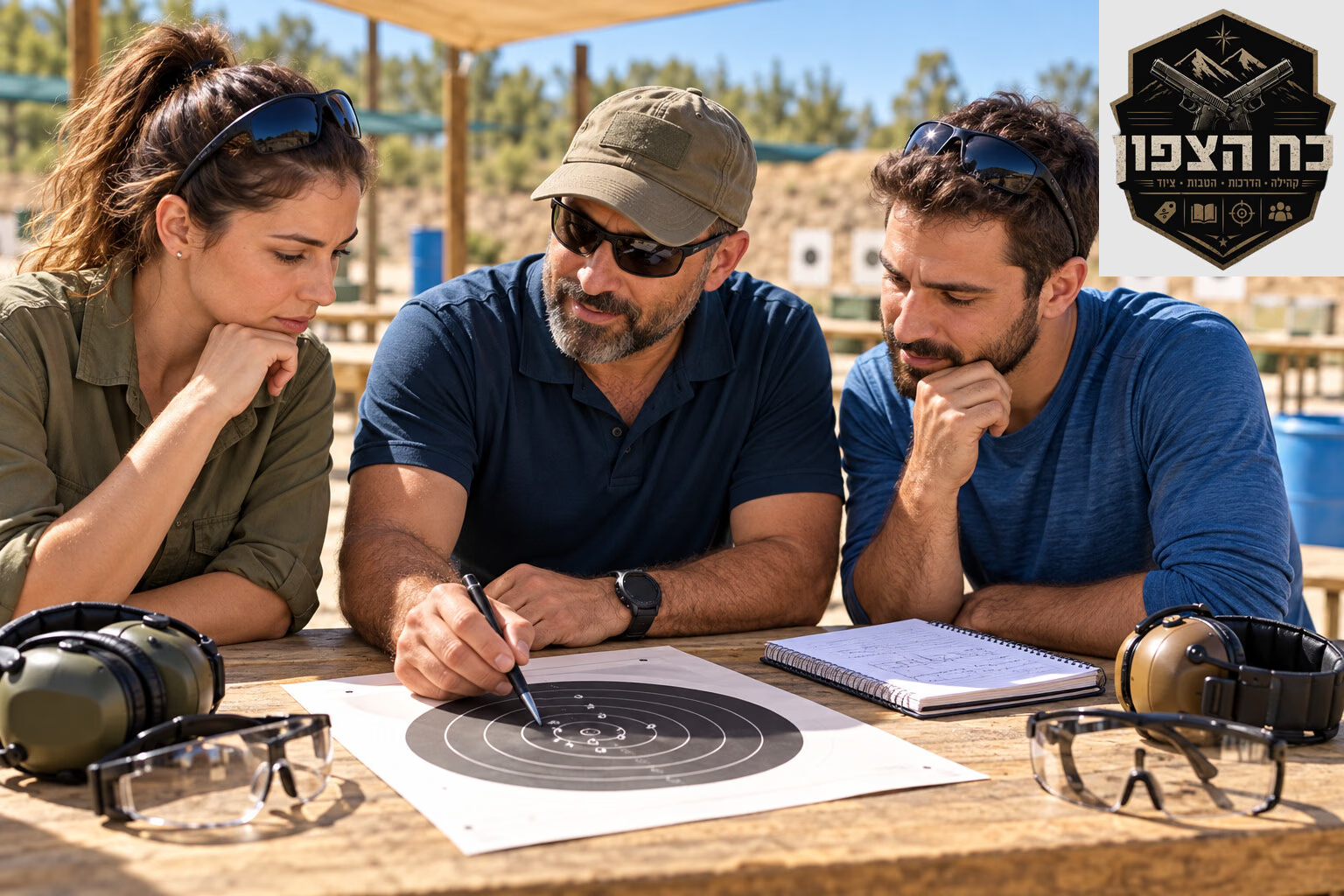
Review a series of results under comparable conditions. Illustrative image.
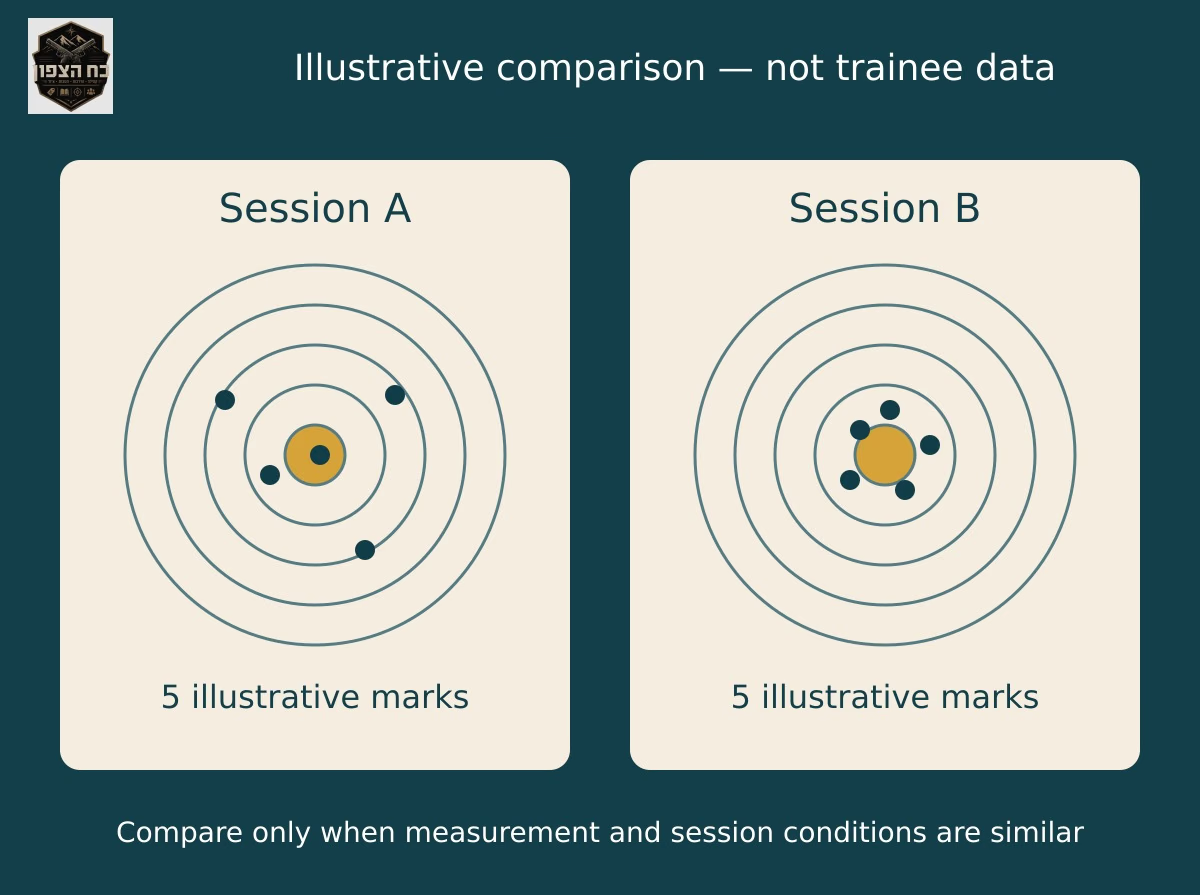
Two example targets with five marks each. These are fictional data illustrating comparison under similar conditions; two sessions alone do not establish learning.
Pace
Time is a useful measure only when safety and accuracy are maintained. Reducing time while losing control is not progress. Compare performance at the same level of quality, then increase the pace gradually and under the instructor's guidance.
Safety and Process
A safety error carries more weight than any score on the target. Measure adherence to commands, a safe direction, trigger discipline and the ability to stop when something is unclear. These are not peripheral to training — they are at the heart of professionalism.
Retention and Transfer
To distinguish momentary performance from learning, assess the ability again after an interval and in a similar but not identical exercise. Has the principle been retained? Does the trainee still require the same feedback?
A Simple Scorecard
Choose three consistent measures: safety quality, consistency and one result relevant to the objective. Add a brief note about the training conditions and the next point to work on. This creates a trend that can be understood, rather than a collection of target photographs.
The measures do not replace the judgement of a qualified instructor. Their purpose is to turn training from a one-off session into a responsible process.
Written by
dor-ben-hamo
Related posts
What Makes Shooting Training Professional?
Quality training is not measured only by the number of rounds. This is what clear objectives, safety, instruction, feedback and debriefing that create genuine progress look like.
Read more
How to Build a Training Programme for Your Level
Beginners, progressing trainees and experienced participants do not need the same track. Here is how to define an objective, a baseline and safe, measurable progress.
Read more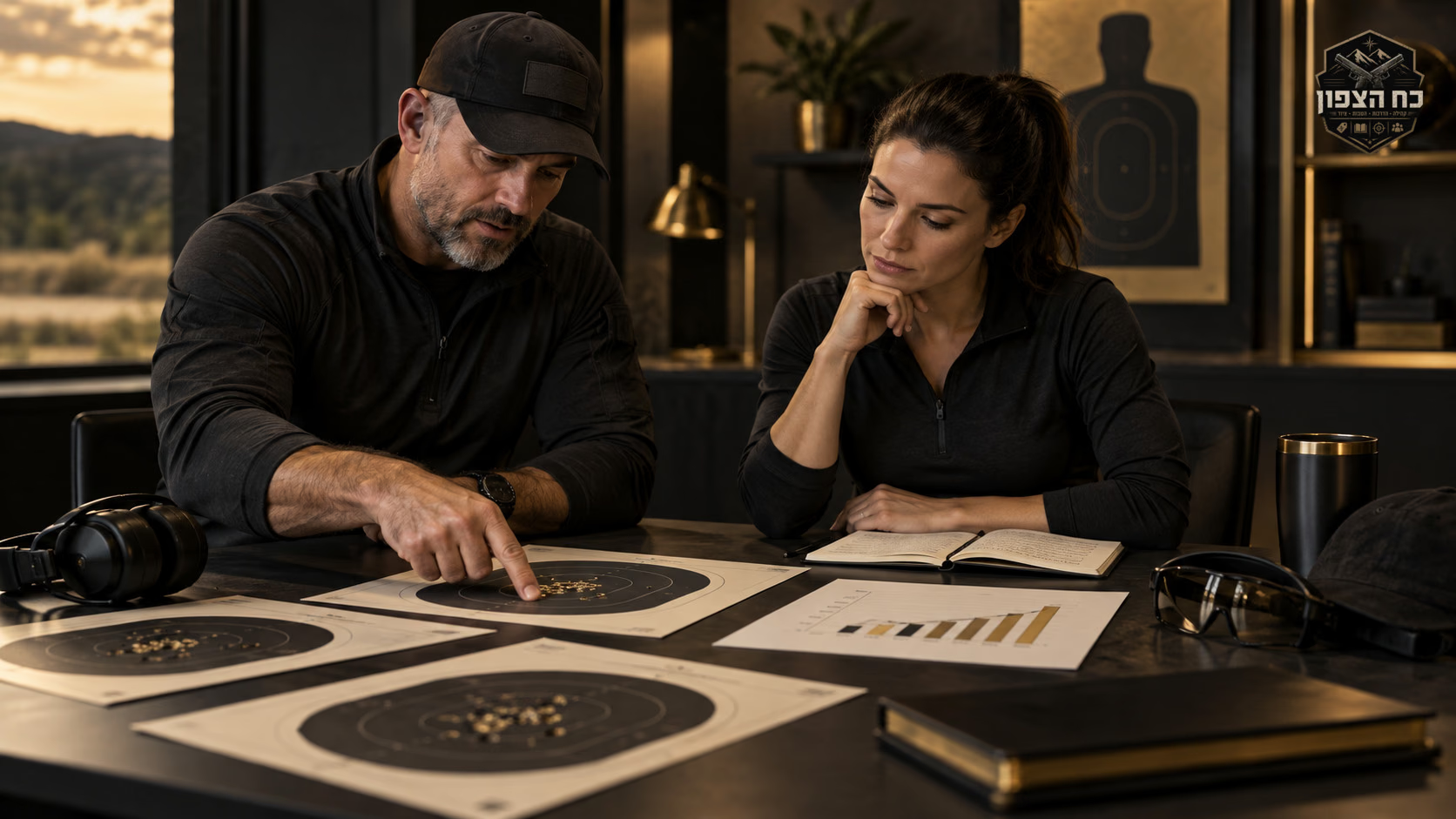
The Post-Training Debrief — The Tool That Turns Experience into Progress
Five minutes of focused review can connect what happened today with the next training session. Here is how to do it without excuses or blame.
Read moreReady to grow?
Schedule a Call