
The Post-Training Debrief — The Tool That Turns Experience into Progress
Five minutes of focused review can connect what happened today with the next training session. Here is how to do it without excuses or blame.
Content credit: Dor Ben Hamo — Shooting Instructor
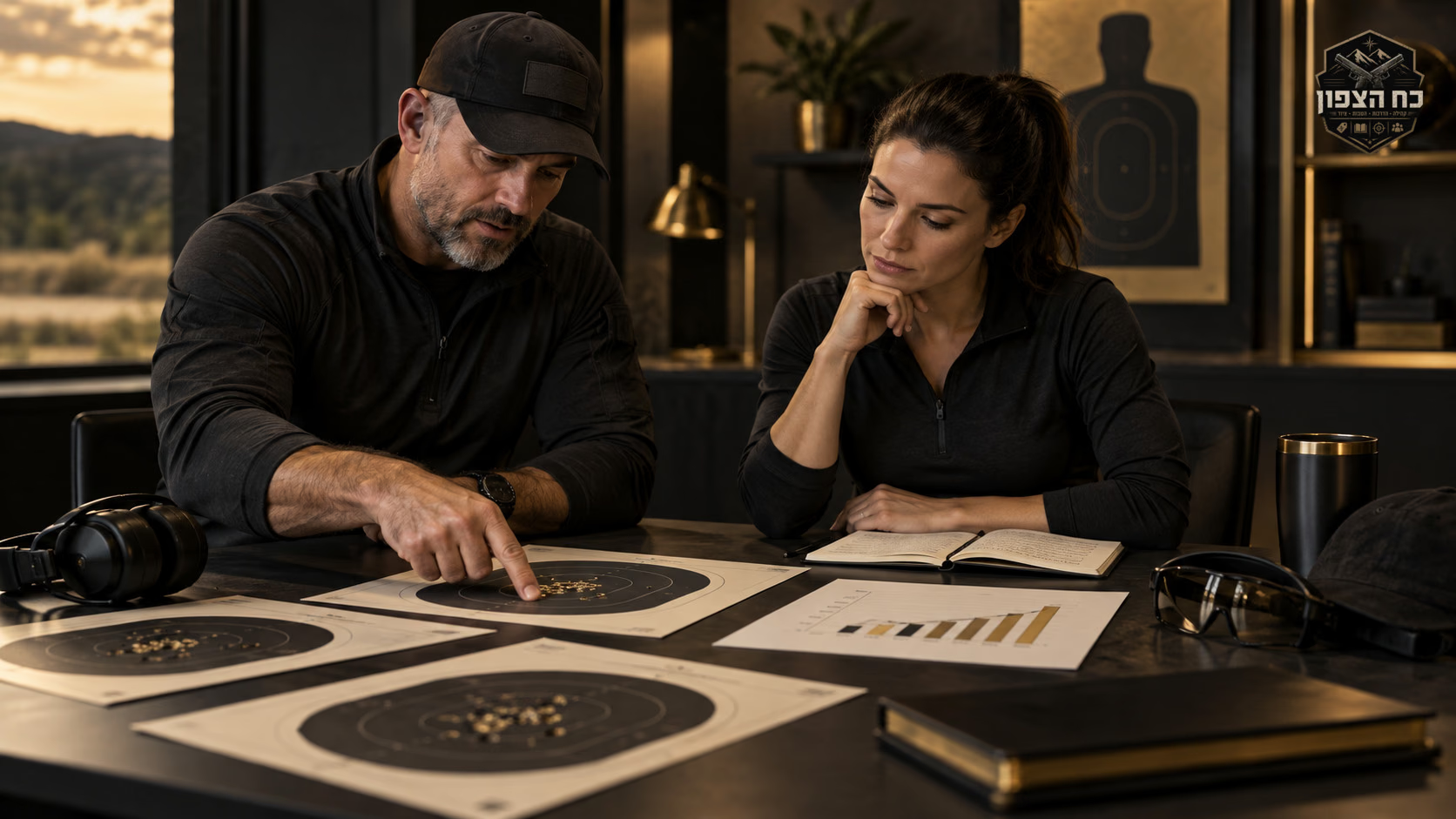
Credit: Koach Hatzafon — original article illustration
Without a Debrief, an Experience Remains Just an Experience
A training session can be intense, successful and even impressive while still leaving very little structured learning. A short debrief helps separate feelings from facts, identify patterns and decide what to do differently next time.
1. What Was the Objective?
Begin with the objective set before the training. If it was not clear, that is already an important conclusion. There is no value in judging an exercise by a measure that was not defined in advance.
2. What Actually Happened?
Describe facts: the result, grouping, time, number of repetitions, instructions that were needed or a safety point that arose. Avoid broad statements such as “I was terrible” or “it went perfectly”.
3. What Worked?
Identify one action that contributed to the performance. It is important to know what should be retained, not only what must be corrected. A success that is not recorded is difficult to reproduce.
4. What Required Correction?
Choose one or two points. A long list of failures is not a work plan. Phrase the point in behavioural terms: what was observed, when it occurred and what feedback the trainee received.
5. What Is the Next Step?
End with a clear decision for the next training session: a basic exercise, a target measure or a return to an earlier stage. If a safety or technical question requires clarification, consult a professional before continuing.
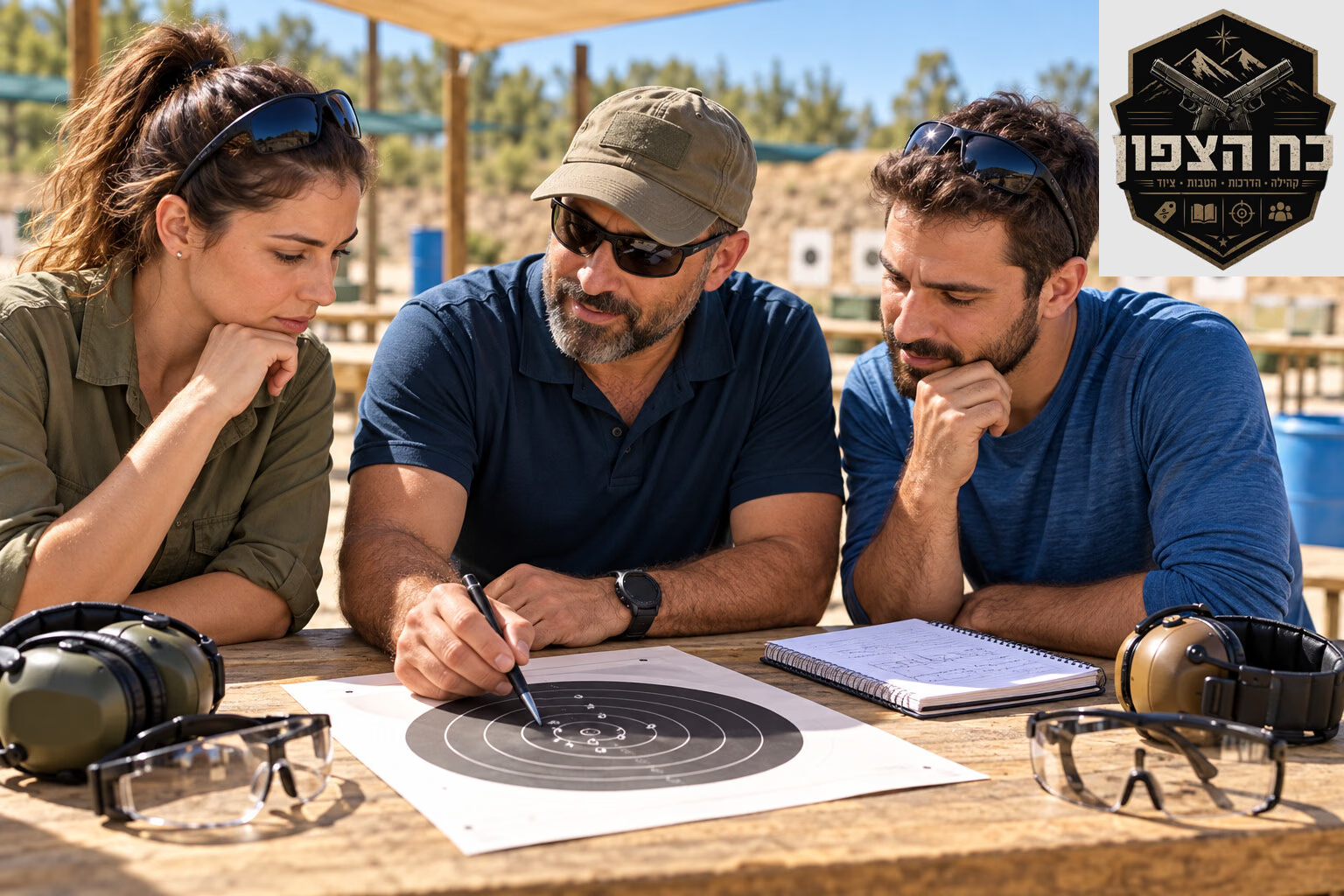
A short debrief connects results, feedback and the next session. Illustrative image.
A Debrief Is Not a Trial
Its purpose is not to find someone to blame or protect the ego. A good debrief creates space to say “I did not know”, “I did not understand” or “I stopped in time” — and translate that into progress. A professional instructor distinguishes between a learning error and a safety violation and addresses each appropriately.
Every training session can be summarised in four lines: the objective, what was retained, what requires work and the next action. Over time, these records become a reliable map of progress.
Written by
dor-ben-hamo
Related posts
What Makes Shooting Training Professional?
Quality training is not measured only by the number of rounds. This is what clear objectives, safety, instruction, feedback and debriefing that create genuine progress look like.
Read more
How to Build a Training Programme for Your Level
Beginners, progressing trainees and experienced participants do not need the same track. Here is how to define an objective, a baseline and safe, measurable progress.
Read more
Not Just Hitting the Target — How Do You Measure Training Progress?
Accuracy matters, but it is only part of the picture. Measures of consistency, safety, pace and decision-making tell a more professional story.
Read moreReady to grow?
Schedule a Call