

Lumens, Candela and Beam Distance: How to Read a Flashlight Specification
A complete visual guide to lumens, candela, beam distance, run time and durability — with information cards and examples for choosing according to use.
Content credit: Dor Ben Hamo — Shooting Instructor
Credit: Koach Hatzafon — original article illustration
How to Read a Flashlight Specification Without Getting Lost
The largest number on the packaging is not necessarily the most important figure. The ANSI/PLATO FL 1 standard creates a common language for measuring flashlights so that models can be compared systematically. Here are all the metrics in one place.
The six main metrics are shown below using consistent pictograms: light output, beam intensity, beam distance, run time, water resistance and impact resistance.

Lumens — How Much Light Leaves the Flashlight
A lumen describes the total quantity of light. A high figure can produce strong, wide illumination, but it does not by itself mean that the flashlight will illuminate a long distance. A high-lumen flashlight with a wide beam suits close work, a room, a car park or a path. With the same amount of light, a narrow reflector can create a beam that reaches farther.
Remember it this way: lumens = the total amount of light.

Candela — How Concentrated the Light Is
Candela measures the beam's highest intensity, generally at its centre. High candela usually indicates a narrow, focused beam that maintains its intensity over distance. Lower candela is not a disadvantage when wide, comfortable illumination is wanted for close work.
Remember it this way: candela = how intense the centre of the beam is.

Beam Distance — A Laboratory Figure, Not a Promise of Identification
Under the ANSI/PLATO FL 1 standard, beam distance is the distance at which 0.25 lux of illumination remains. This consistent measurement threshold makes it possible to compare flashlights. It does not mean that every detail will be clearly visible at that distance.
In the field, performance is affected by beam shape, fog, dust, bright walls, battery condition and the eye's ability to distinguish details. Treat distance as a comparison metric, not a guaranteed working range.

Run Time — What Is Actually Measured
In an FL 1 test, measurement begins after the flashlight has been operating for a short period and continues until light output falls to 10% of its initial value. A flashlight with a long stated run time therefore does not necessarily remain at maximum output throughout that period.
Look for information about:
- Run time at each output level.
- The decline in output over time.
- A reserve-light mode after the optimum period ends.
- Battery type and the availability of replacements.
- Charging time and the ability to operate with standard batteries.

Water and Dust Resistance
IP ratings distinguish protection from dust from protection from water. For example, IPX4 refers to resistance to splashing, while higher ratings may include immersion under defined conditions. Always check the exact meaning on the manufacturer's page, and do not assume that a rain-resistant flashlight is suitable for every immersion depth or duration.

Impact Resistance
This figure indicates the height from which flashlight samples were dropped onto a hard surface while remaining functional and unbroken. It provides a basic comparison, but it does not guarantee that the flashlight will survive every drop or an impact at a different angle.
Wide, Focused or Combined Beam?
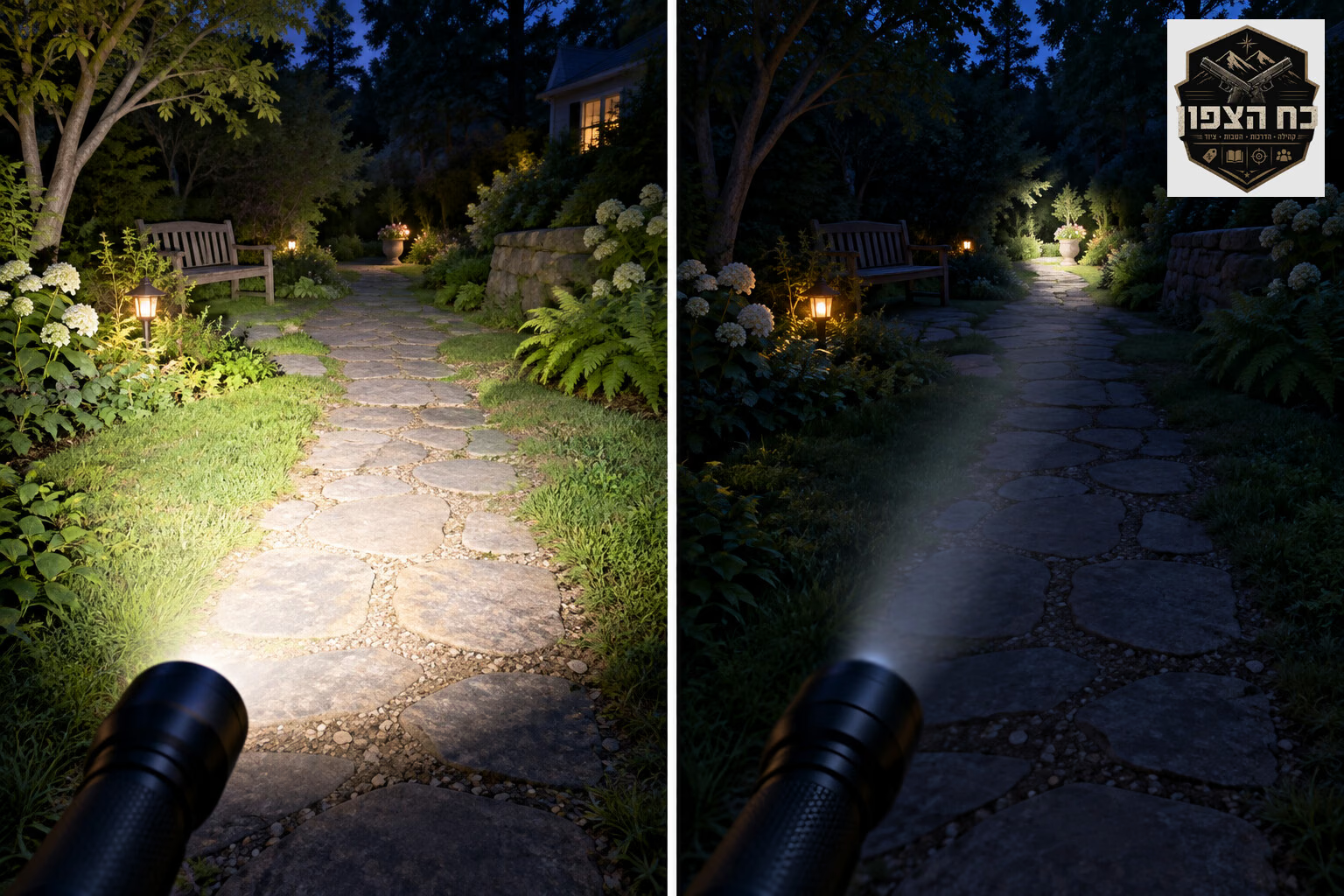
Wide and focused beams: conceptual visualization, not a performance test. Illustrative image.
Close Work, Repairs and Rooms
Wide, even beam — prefer comfortable coverage and low-output modes.
Walking and Moving Outdoors
Combined beam — a useful centre together with peripheral illumination.
Long-Distance Identification
Narrow, focused beam — pay particular attention to candela and distance.
General-Purpose Bag Flashlight
Balanced beam — a simple interface, run time and weight matter more than a momentary peak.
Headlamp
Wide or combined beam — comfort, stability and weight are part of performance.
An Example That Shows the Balance
Petzl data shows that a headlamp may offer a high mode of several hundred lumens alongside a lower intermediate mode that operates for many hours. Streamlight data shows that a flashlight with fewer lumens can still achieve significant distance when its beam is more concentrated. Always compare at least four figures together: lumens, candela, beam distance and run time.
Five Questions Before Choosing
- At what actual distance will I use the flashlight?
- Is it more important to see a wide area or a distant point?
- How long do I need uninterrupted light?
- Can I charge or replace a battery in the field?
- What weight and interface can I operate comfortably?
Quick Selection Guide
- For close work: a wide beam, several output levels and a simple interface.
- For moving outdoors: a combined beam, comfortable weight and balanced run time.
- For long-distance searching: high candela and a focused beam.
- For an emergency bag: run time, activation lockout, durability and an available battery type.
- For extended use: heat management, grip and weight matter as much as light output.
View equipment in the Koach Hatzafon shop
Professional sources used to prepare this guide: Petzl — measuring lighting performance under ANSI/PLATO FL 1; Streamlight — explanation of FL 1 metrics. The information was processed and rewritten for Koach Hatzafon and reviewed on 8 September 2026.
Manufacturer data allows better comparison when products are tested to the same standard and under the same conditions. Match the flashlight to actual use, not to a single number on the packaging.
Written by
dor-ben-hamo
Related posts
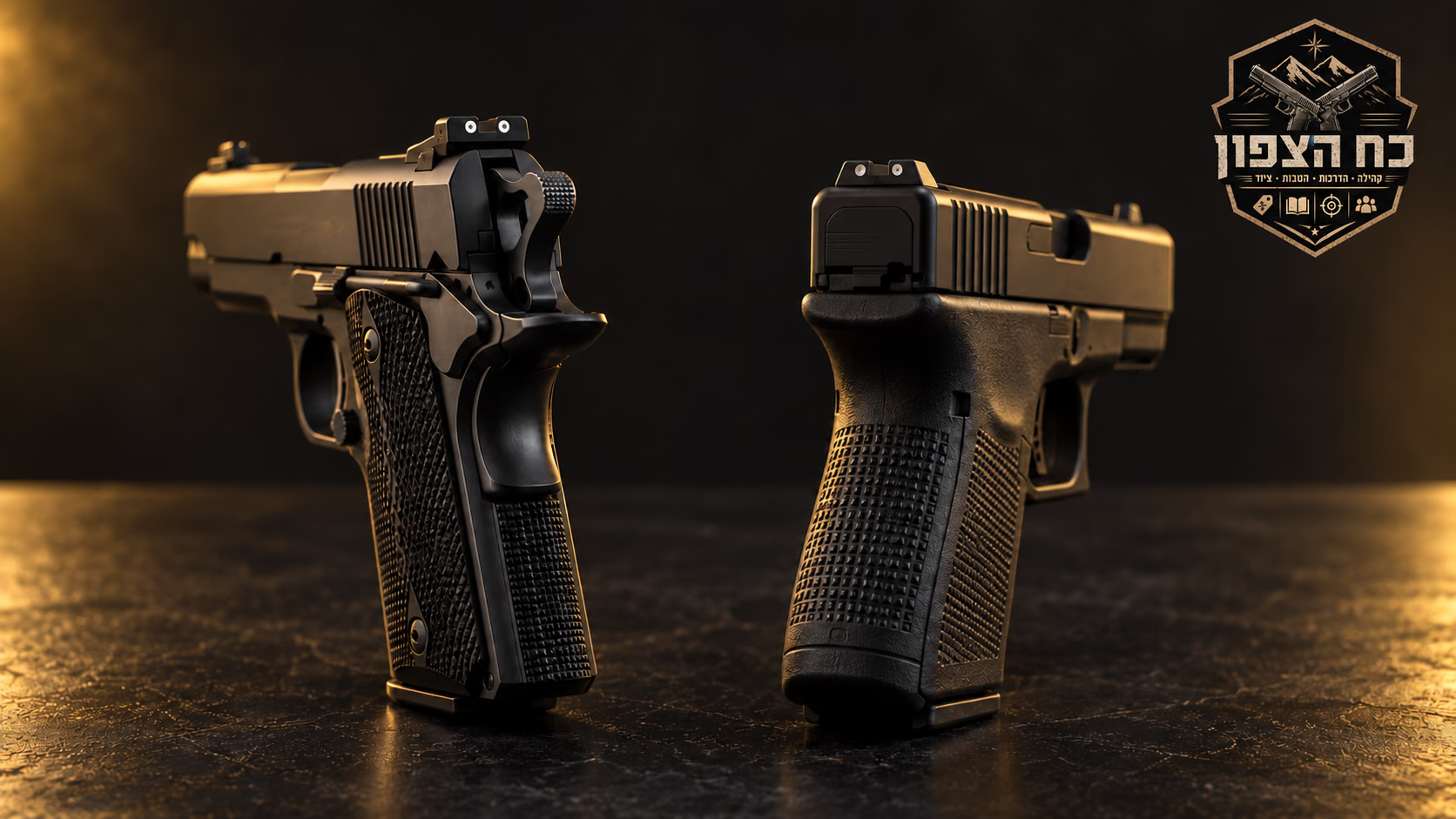
Hammer-Fired or Striker-Fired — What Is the Difference Between Common Handgun Actions?
A professional comparison of hammer-fired and striker-fired pistols, focusing on operating feel, consistency, maintenance and training.
Read more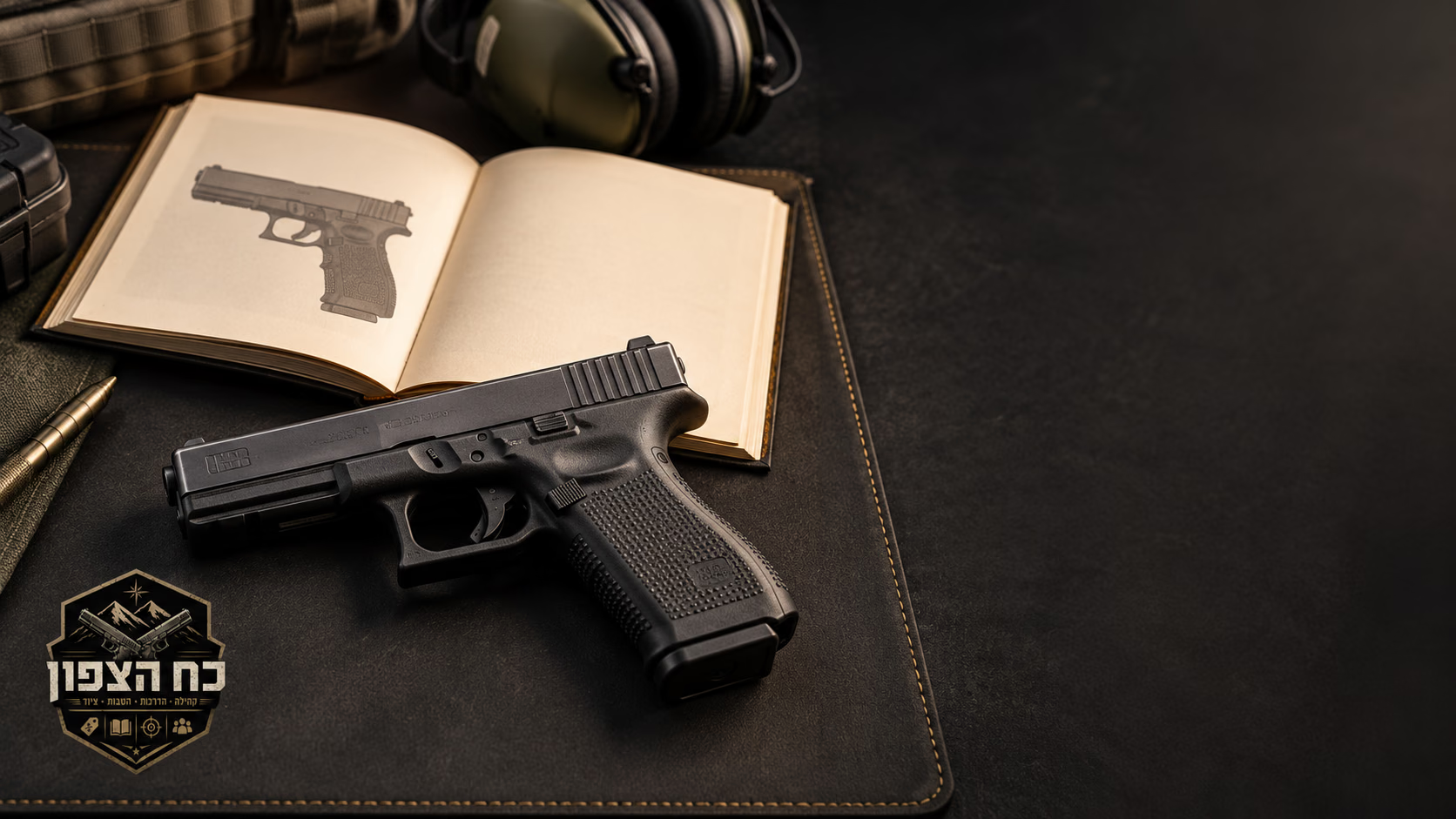
Handgun Glossary — The Complete Guide for Firearm Licence Holders
Barrel, slide, grip, magazine, and front and rear sights: a clear glossary that helps identify parts, read manufacturers' instructions and communicate precisely with professionals.
Read more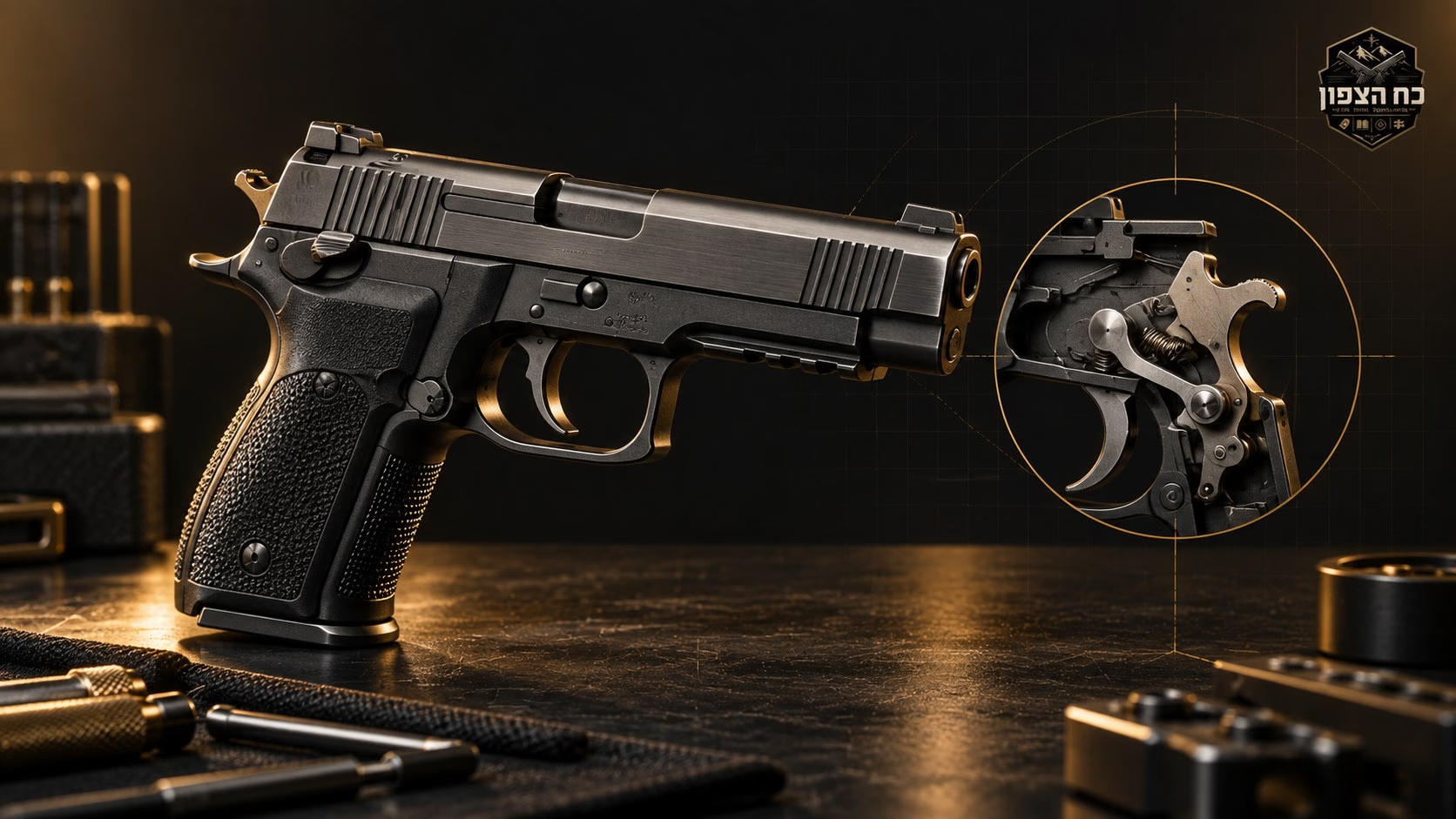
Single Action, Double Action and Striker-Fired — How Does a Pistol's Action Work?
A clear guide to the differences between common action types, what they mean for responsible use and the questions worth asking before choosing a firearm and training with it.
Read moreReady to grow?
Schedule a Call