

How to Choose a Handgun: A Guide to Responsible Decision-Making
Hand fit, control, reliability, weight, service and range training — how to compare handguns without deciding by appearance or a single figure.
Content credit: Dor Ben Hamo — Shooting Instructor
Credit: Koach Hatzafon — original article illustration
The Right Handgun Is One You Can Control Safely
Choosing a handgun is not a competition to find the smallest, most powerful or most popular model. It is a decision that combines personal fit, controllability, reliability, carry comfort, service availability and proper training.
Guiding principle: a suitable handgun is one that can be gripped, operated and carried safely and consistently — after an extended training session, not only during the first few minutes in the shop.
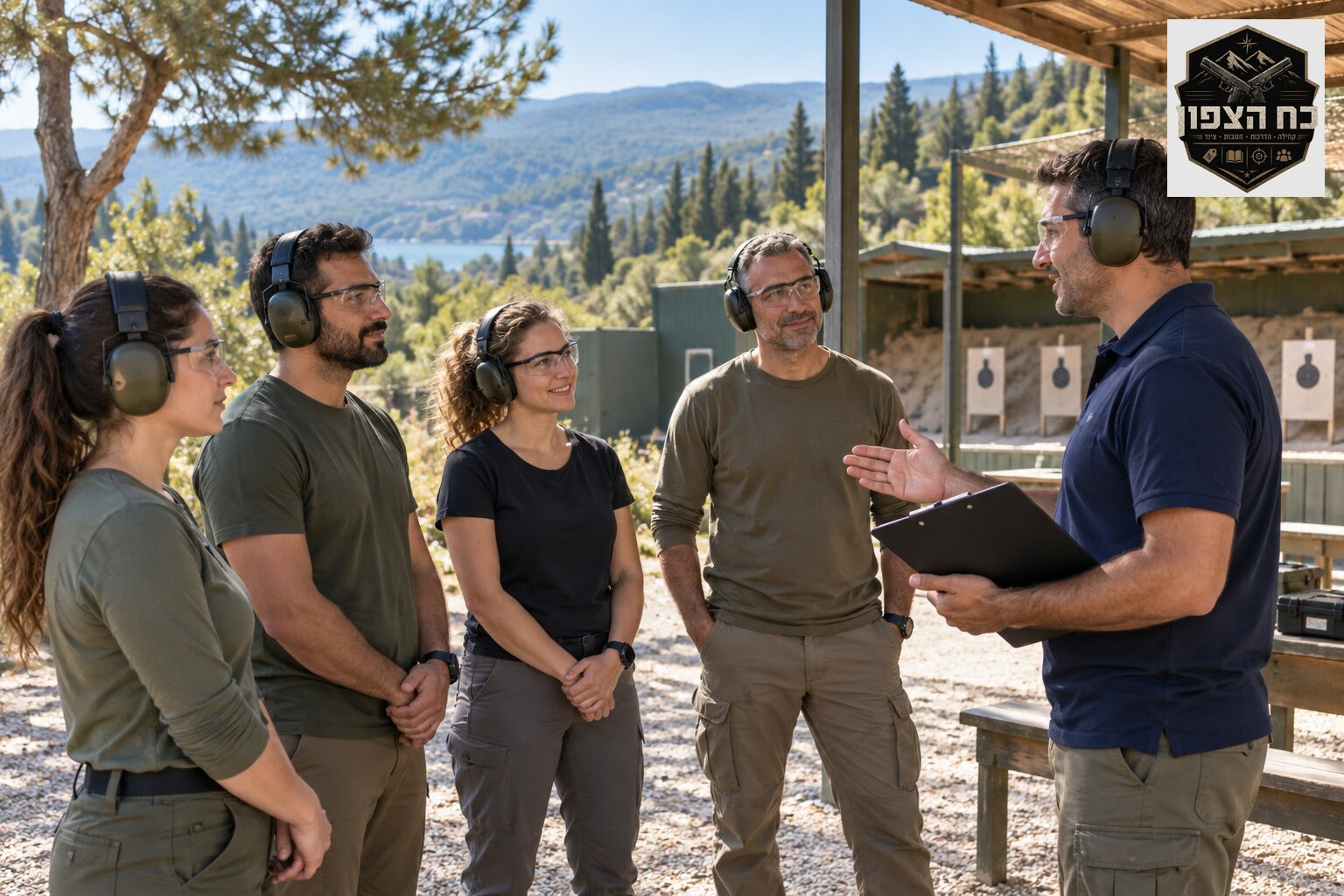
Consulting an instructor before making a decision: clarify needs, learn safety requirements and consider individual fit. Original illustrative image.
Before Comparing Models: Define the Framework and Intended Use
In Israel, purchasing and possessing a firearm are subject to a valid licence, the appropriate approval, training at a licensed shooting range and current legal requirements. Begin by checking eligibility and documentation, and only then compare the options.
Define in advance:
- The primary use: everyday carry, training or a combination of the two.
- How frequently you expect to train.
- Any limits concerning weight, size or carry comfort.
- Access to professional service, spare parts and compatible accessories.
- The total budget — including a quality holster, protective equipment, maintenance and training.
Seven Points to Check
1. Hand Fit
The grip should allow stable, continuous contact without unusual effort. Check whether the grip circumference suits your hand and whether you can reach the controls without breaking your grip or excessively rotating the pistol.
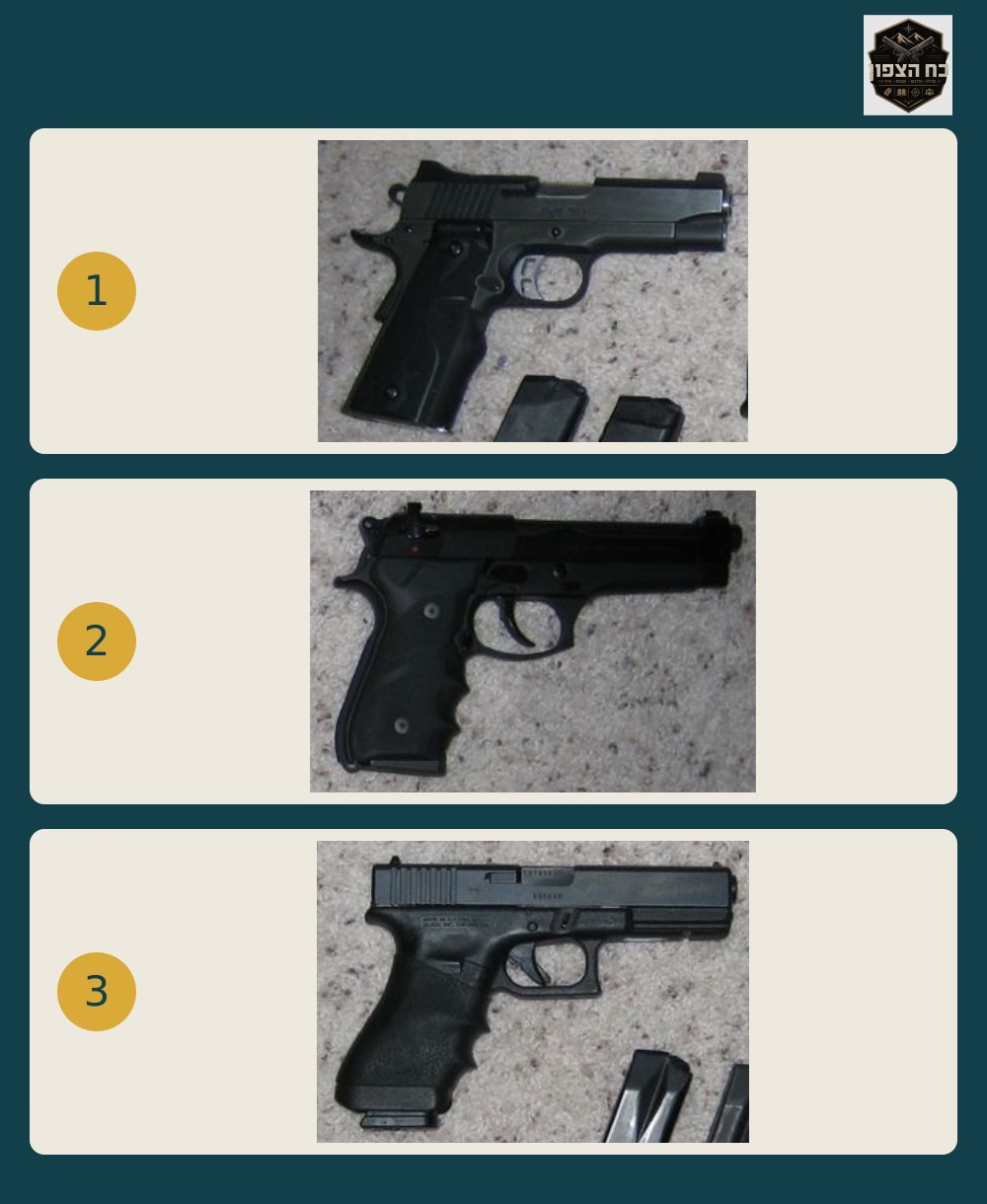
Photographed examples: 1 — Kimber Eclipse Pro II; 2 — Beretta 92FS Brigadier; 3 — Glock 22. Grip shape and control placement differ. Aftermarket grip accessories are present; this is not a dimensional comparison or a purchase recommendation.
Original photograph, released into the public domain.

2. Control, Not Just Comfort
A light, compact handgun may be more comfortable to carry but can sometimes be harder to control while shooting. A larger, heavier handgun may be steadier and more comfortable at the range but less convenient for extended carry. The goal is to find a balance that suits the person and intended use.
3. Clear and Consistent Operation
With a qualified instructor, check that the controls are clear, that your grip does not interfere with them and that the necessary actions can be performed without unnecessary strain. An operating mechanism that is familiar and straightforward to practise is generally preferable to a complex system that does not suit the user.
4. Sights and a Clear Sight Picture
The sights should be easy to identify in the lighting conditions in which they are expected to be used. If an optical sight is being considered, check actual compatibility, service options and suitable training — not merely whether the handgun is optics-ready.
5. Reliability and Service
Prefer a model with a recognised importer or service provider, a clear warranty and reasonable availability of wear parts and magazines. An impressive specification matters less when there is no professional address for resolving a fault.
6. Holster and Carry Compatibility
The holster is part of the safety system. It should fit the exact model, protect the trigger area, retain the handgun securely and allow it to be carried in accordance with the law and training guidance.
7. Ability to Train Over Time
The important question is not only how the handgun feels in the first minute, but whether grip, concentration and control can be maintained after a structured shooting series. Genuine comfort is assessed over time.
How to Compare at a Licensed Shooting Range
A useful comparison is performed under consistent conditions and an instructor's supervision:
- Assess a limited number of models that suit the intended purpose.
- Use the same training framework and safety rules.
- Check grip quality, control, ease of reaching the controls and consistency.
- Immediately after each trial, record what felt natural and what required effort.
- Do not make a decision while tired, under pressure or uncertain.
There is no need to chase a single result on the target. The instructor should assess the full picture with you: safety, control, comfort, consistency and the ability to continue training.
Common Selection Mistakes
- Choosing only on the basis of a friend's recommendation or an online video.
- Assuming that the smallest handgun is always the most comfortable.
- Focusing on accessories before assessing the fundamentals.
- Ignoring the weight carried every day.
- Purchasing before checking holster and service availability.
- Skipping practical experience with a qualified instructor.
- Assuming that a model suited to one person will suit everyone.
A Short Checklist Before Deciding
- Does the grip feel stable and natural?
- Can the controls be reached without an extreme change of grip?
- Can control be maintained after a shooting series?
- Are service, warranty support and parts available in Israel?
- Is there a safe holster that fits the exact model?
- Do the weight and size suit the carry routine?
- Does the budget also cover training, protective equipment and maintenance?
- Has a qualified instructor assessed the fit in practice?
The Real Work Begins After the Choice
Even a good choice does not replace training. Learn the manufacturer's instructions, practise in an authorised setting, complete periodic refresher training and establish an organised routine for carrying, storage and maintenance.
View Koach Hatzafon training sessions
Guide to storing a firearm at home
Professional sources: the Firearm Licensing Division at the Ministry of National Security; the manufacturer's instructions for the specific firearm; instruction at a licensed shooting range.
The information in this article is general and does not replace manufacturers' instructions, practical training or checking current law and licensing guidance.
Written by
dor-ben-hamo
Related posts
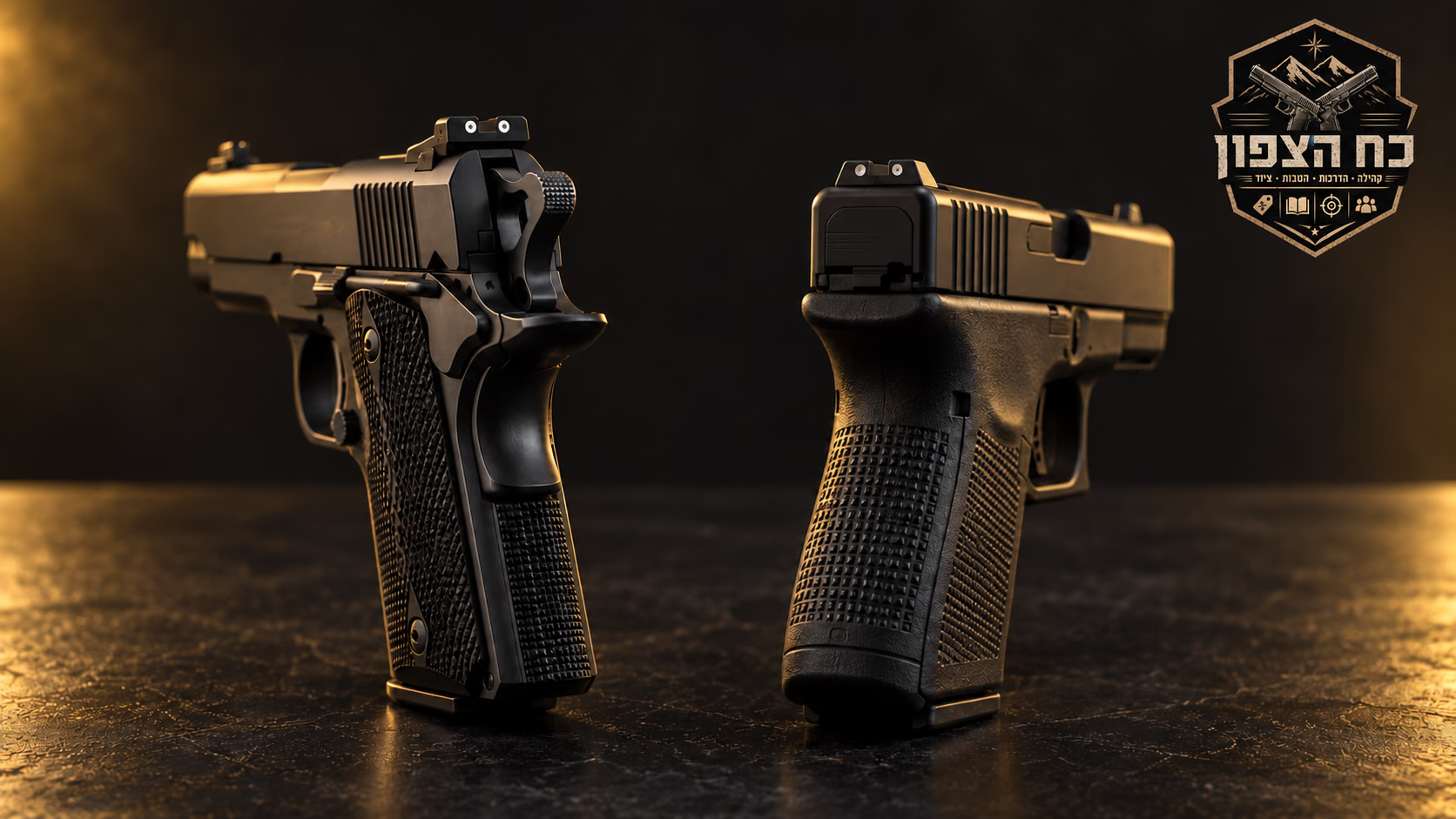
Hammer-Fired or Striker-Fired — What Is the Difference Between Common Handgun Actions?
A professional comparison of hammer-fired and striker-fired pistols, focusing on operating feel, consistency, maintenance and training.
Read more
Handgun Glossary — The Complete Guide for Firearm Licence Holders
Barrel, slide, grip, magazine, and front and rear sights: a clear glossary that helps identify parts, read manufacturers' instructions and communicate precisely with professionals.
Read more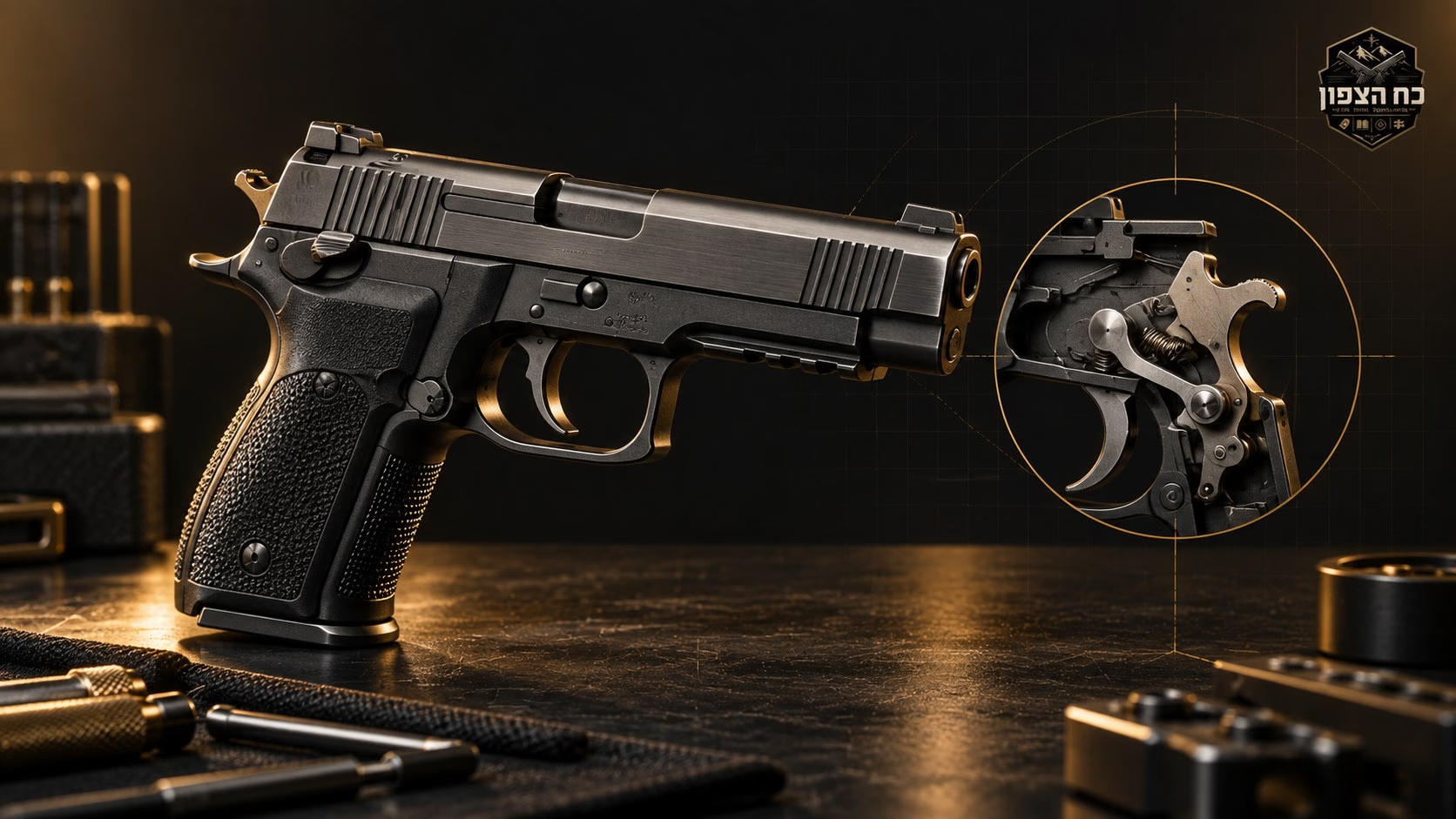
Single Action, Double Action and Striker-Fired — How Does a Pistol's Action Work?
A clear guide to the differences between common action types, what they mean for responsible use and the questions worth asking before choosing a firearm and training with it.
Read moreReady to grow?
Schedule a Call