

Handgun Maintenance: A Safe Checklist for Reliability
When to inspect, what to use, which mistakes to avoid and when to stop and consult a professional — a general, responsible maintenance guide for Firearm Licence holders.
Content credit: Dor Ben Hamo — Shooting Instructor
Credit: Koach Hatzafon — original article illustration
Maintenance Is Part of a Safety Routine
A pistol that is carried and used in training accumulates dust, perspiration, moisture and residue. Proper maintenance is not only about appearance — it helps identify wear, corrosion or a change in function before it becomes a problem.
The most important principle: work only according to the manufacturer's manual for the specific model. A general article cannot replace precise instructions for your firearm.
Before Any Maintenance: Create a Safe Work Environment
Before beginning, stop and organise the area:
- Choose a well-lit, stable and ventilated place without distractions.
- Remove ammunition from the table and work area.
- Make sure the firearm is unloaded in accordance with the manufacturer's instructions and the safety rules you have learned.
- Keep the barrel pointed in a safe direction and your finger outside the trigger area.
- Open the manufacturer's manual to the maintenance section before disassembling anything.
- Use a work mat that prevents small parts from being lost.
- Wear safety glasses when recommended by the manufacturer.
If there is any doubt about the firearm's condition or any action, do not continue. Consult an instructor, a qualified gunsmith or an authorised service facility.
When to Inspect and Maintain
Frequency varies according to the model, ammunition, carry conditions and manufacturers' instructions. Times worth noting include:
- After training, in accordance with the manufacturer's guidance.
- After exposure to rain, high humidity, dust or sand.
- When the firearm has been carried for a long period in a hot environment or close to the body.
- Before and after extended storage.
- When there is a change in feel, sound, movement or function.
- According to the maintenance and parts-replacement intervals specified in the manufacturer's manual.
There is no need to clean endlessly. Maintenance that is too frequent, the use of unsuitable substances or disassembly beyond what is required can cause damage instead of preventing it.
A Basic Maintenance Kit
A good maintenance kit does not have to be large. It should suit the model and the manufacturer's instructions:
- The current manufacturer's manual.
- A clean, light-coloured work mat.
- Suitable lint-free cloths or pads.
- A brush made of a material approved by the manufacturer.
- A cleaning agent and lubricant suitable for the firearm.
- Focused lighting for inspecting surfaces.
- Gloves and safety glasses as needed.
- A small container for parts if the manual requires field stripping.
Do not use an improvised tool, an unidentified substance or a spray not intended for the materials from which the pistol is made.
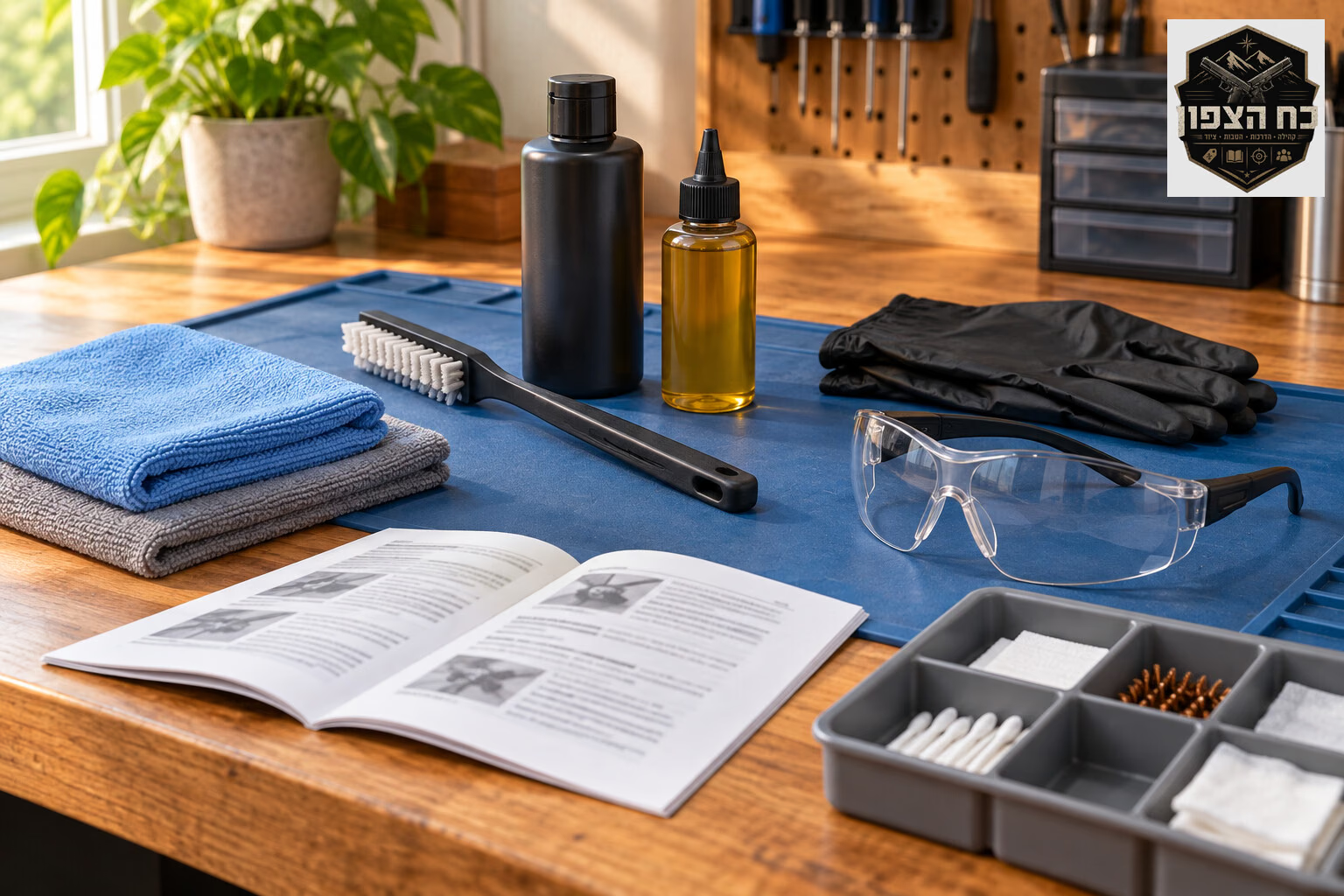
An organized workspace and the model instructions are the basis of maintenance. Illustrative image.
A General and Safe Sequence
This is only a general sequence; perform the exact steps according to the model's manual:
- Read the maintenance instructions from beginning to end.
- Carry out a safety check and remove ammunition from the area.
- Perform only the level of disassembly the manufacturer permits the user to carry out.
- Gently clean the permitted areas and inspect for accumulated dirt, rust or wear.
- Dry the parts and remove excess material.
- Lubricate only the points and in the quantity specified by the manufacturer.
- Reassemble in accordance with the manual.
- Perform a function check without ammunition, exactly as instructed by the manufacturer.
- Record the date, unusual use or any finding that requires monitoring.
How Much Lubricant Is Needed?
More is not necessarily better. Excess oil can attract dust, reach areas for which it is not intended and make it harder to identify the source of a malfunction. Too little lubricant may increase friction and wear.
The correct answer is in the manufacturer's manual: which points require lubrication, which product is approved and what quantity is appropriate. Do not replace precise guidance with general advice from the internet.
Signs That Require You to Stop and Consult a Professional
Do not continue using the firearm if any of the following appears:
- A crack, bend, break or significant corrosion.
- A loose part or movement that was not present before.
- Unusual resistance during operation.
- A malfunction that recurs when suitable ammunition is used.
- Signs of damage to the barrel or an internal component.
- Loss of a spring, pin or another part.
- Any doubt about reassembly or the function check.
Do not sand, bend, drill or modify parts at home. Malfunctions and modifications should be handled by a qualified professional and in accordance with the law.
Common Maintenance Mistakes
- Leaving ammunition on the work table.
- Starting without the manufacturer's manual.
- Disassembling beyond the level permitted for the user.
- Mixing cleaning agents and lubricants without checking compatibility.
- Using too much oil.
- Applying force when a part does not fit easily.
- Ignoring minor rust or a recurring malfunction.
- Finishing without the prescribed function check.
- Returning the firearm to storage while it is damp.
After Maintenance
When finished, clean the work surface, wash your hands, store the substances away from children and return the pistol to secure storage in accordance with the law and licensing guidance. If the maintenance followed a malfunction, do not rely on the firearm merely “looking serviceable” — request a professional inspection before returning it to use.
Guide to storing a firearm at home
View training and refresher sessions
Professional sources: the manufacturer's instructions for the specific firearm; the Firearm Licensing Division at the Ministry of National Security; Project ChildSafe's safe-storage principles.
This information is general and does not replace a manufacturer's manual, an inspection by a qualified gunsmith, practical instruction or current legal guidance.
Written by
dor-ben-hamo
Related posts
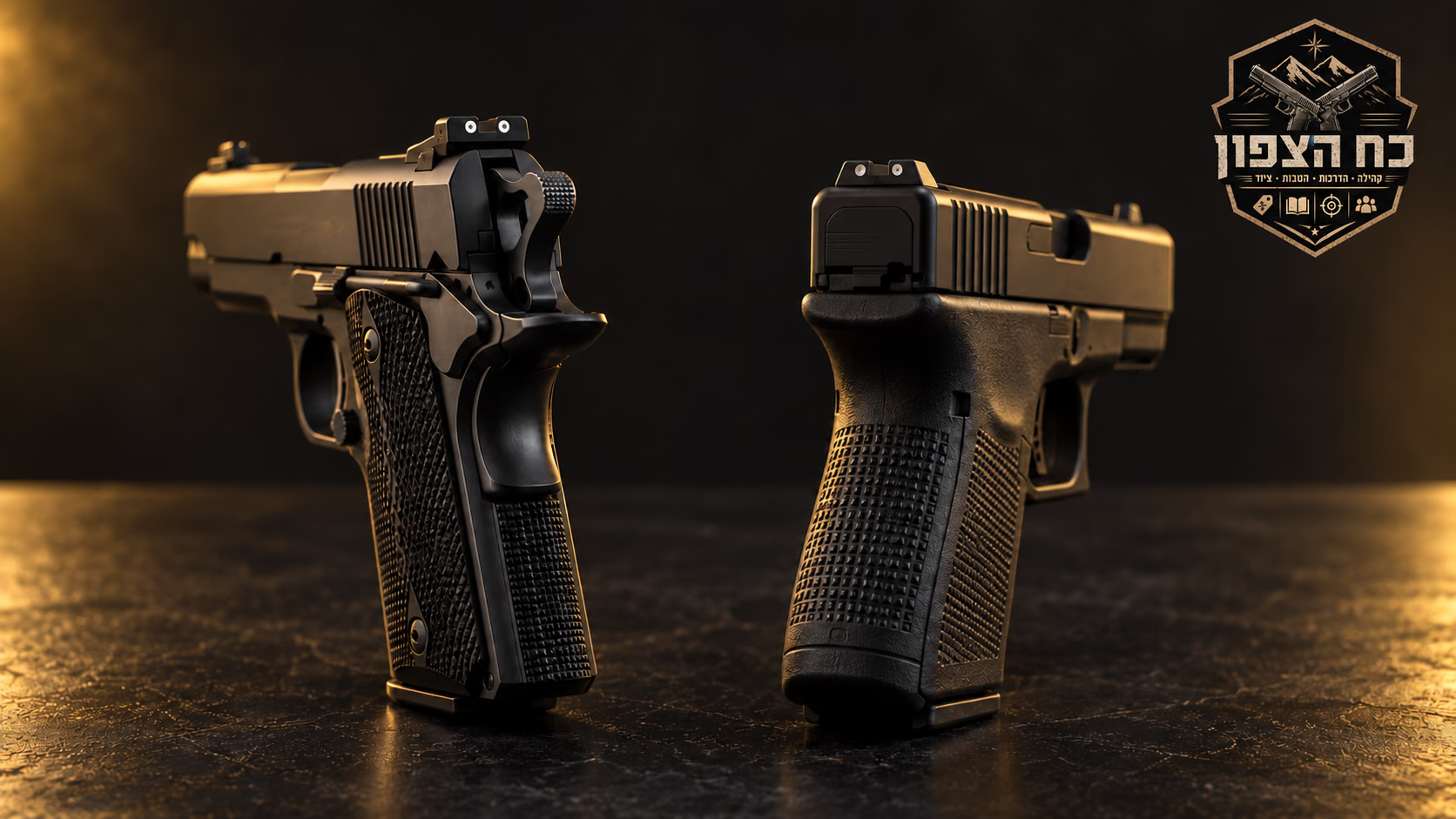
Hammer-Fired or Striker-Fired — What Is the Difference Between Common Handgun Actions?
A professional comparison of hammer-fired and striker-fired pistols, focusing on operating feel, consistency, maintenance and training.
Read more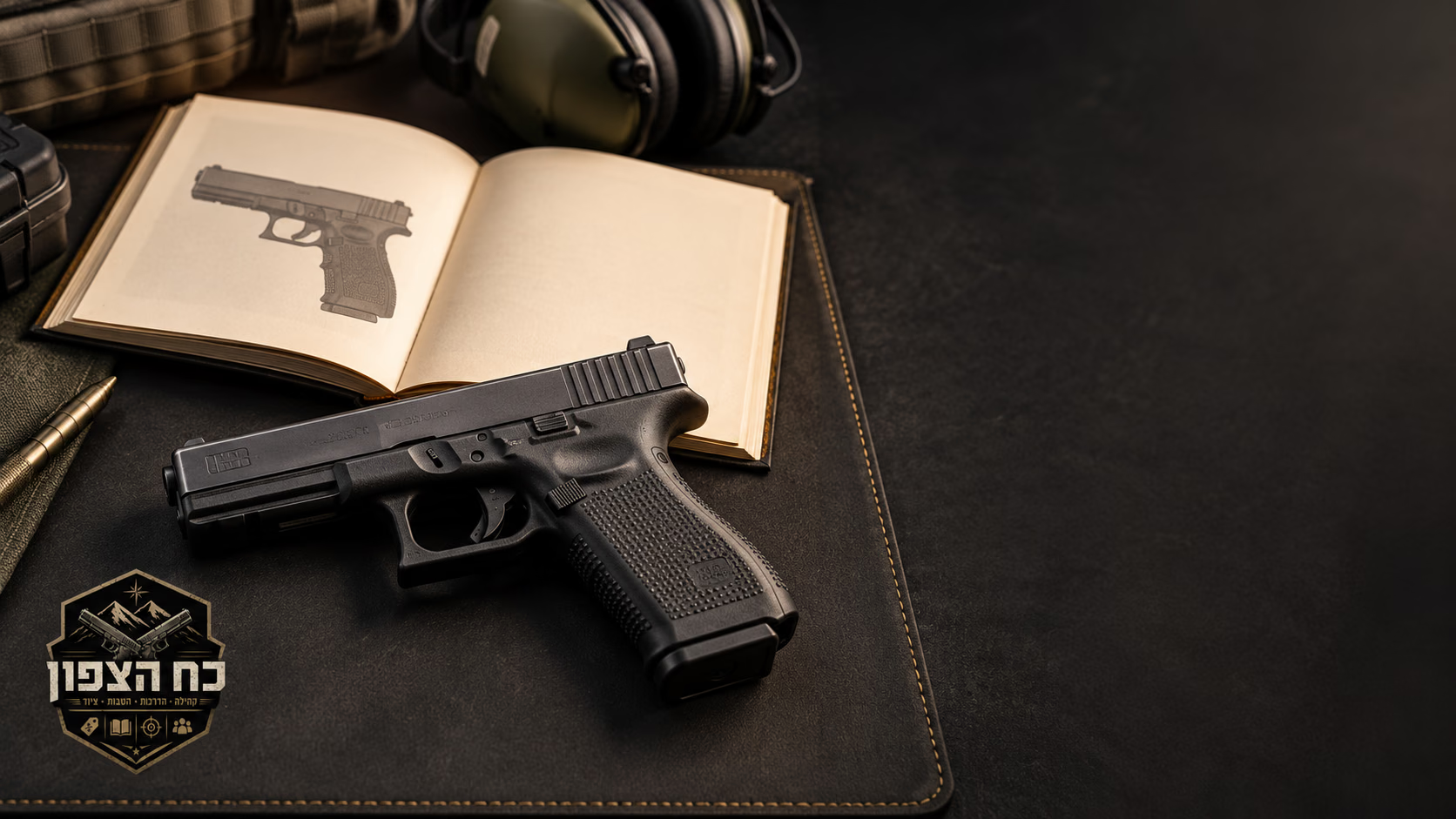
Handgun Glossary — The Complete Guide for Firearm Licence Holders
Barrel, slide, grip, magazine, and front and rear sights: a clear glossary that helps identify parts, read manufacturers' instructions and communicate precisely with professionals.
Read more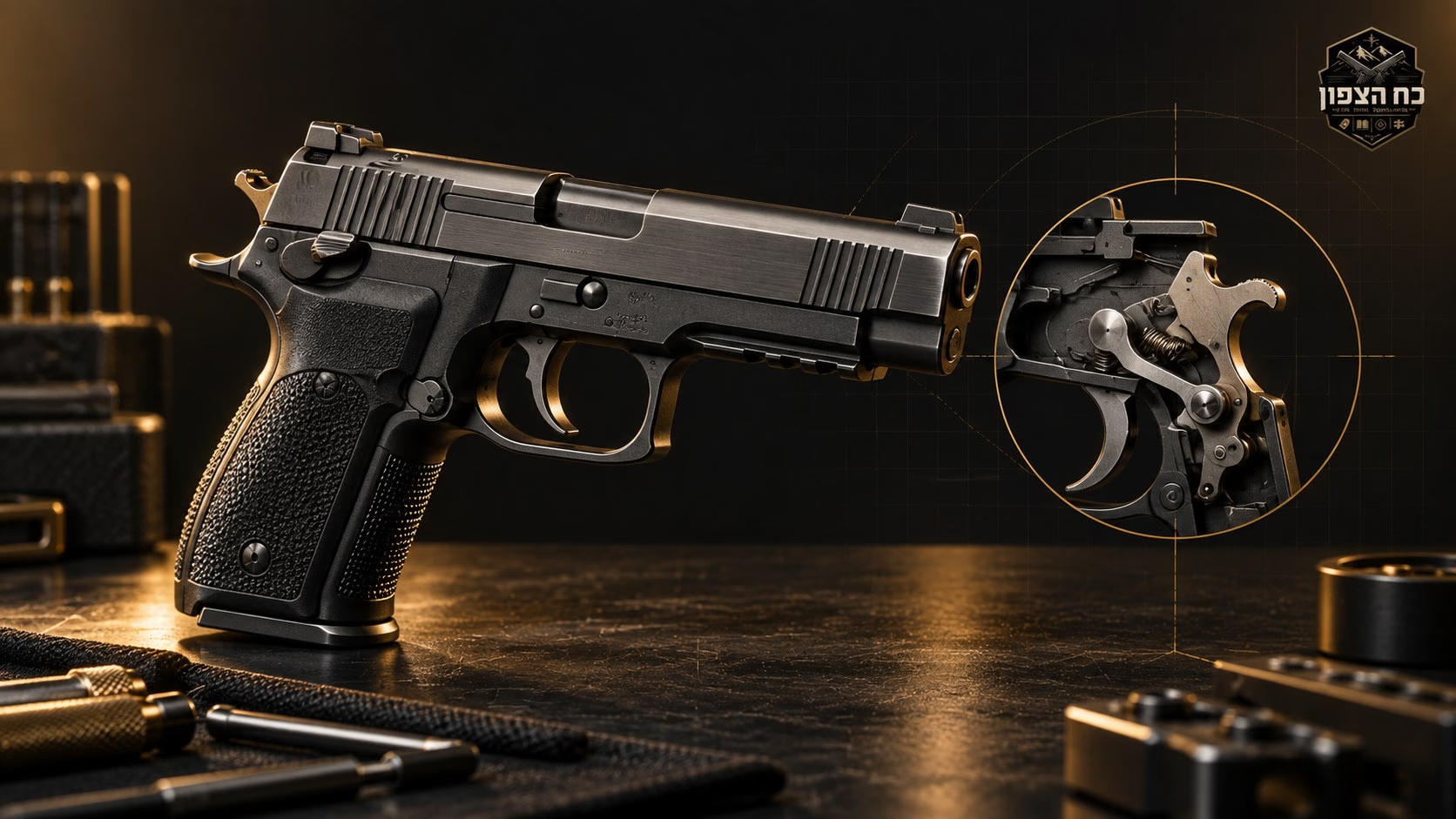
Single Action, Double Action and Striker-Fired — How Does a Pistol's Action Work?
A clear guide to the differences between common action types, what they mean for responsible use and the questions worth asking before choosing a firearm and training with it.
Read moreReady to grow?
Schedule a Call