
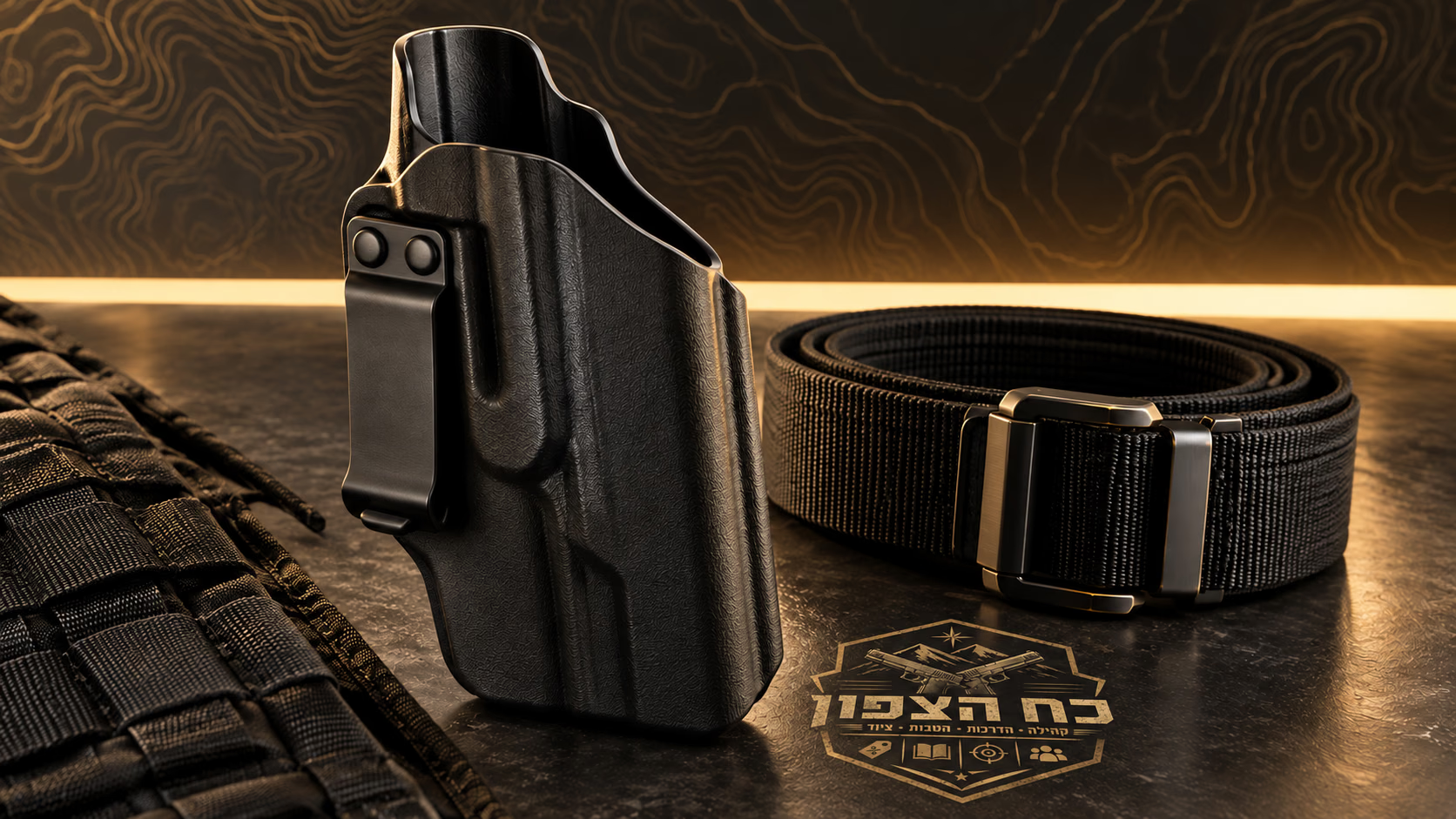
Everyday Carry Holster: What to Check Beyond Comfort and Appearance
A holster is part of a carry system. Here is how to assess compatibility and safety, understand the product's limitations and ask the supplier the right questions.
Content credit: Dor Ben Hamo — Shooting Instructor
Credit: Koach Hatzafon — original article illustration
Model compatibility, trigger protection, attachment quality and material condition — questions worth answering before making a choice.
A holster can look excellent in a photograph yet suit the buyer's daily routine poorly. It can also be very comfortable while still raising important questions about compatibility, material condition or attachment quality. It is therefore useful to approach the decision with an organised list of requirements before considering colour or finish.
The goal is not to find a product that everyone likes. It is to choose a system the manufacturer intends for your equipment, that can be checked professionally and maintained according to its instructions. This article concerns selection and condition checks; it is not a guide to drawing, reholstering or modifying equipment.
Start with Precise Identification
The pistol brand alone is not enough to determine compatibility. Give the supplier the full model, version and existing accessories, and ask them to identify the exact holster model. When the answer is only “it fits this family”, further verification is still needed. A clear label and a link to the manufacturer's instructions make it possible to ask a focused question and return to the answer later.
Safariland warns that changes to a firearm's specifications can affect compatibility and asks users to verify actual fit. When in doubt, it directs users to customer service. For the buyer, this means obtaining express confirmation for the specific combination rather than relying on visual similarity. Check fit in accordance with the manufacturer's instructions and with qualified guidance. Safariland safety warnings.
Covering the Trigger Area Is a Fundamental Question
A holster should protect the trigger area when correctly fitted to the firearm for which it was designed. The manufacturer's article on fit warns that an incompatible holster may leave the trigger exposed or impair retention of the firearm. An impressive appearance does not answer this question. Safariland — the importance of holster fit.
When additional accessories are present, ask the supplier to explain the approved combination and its limitations. Do not infer from a photograph that the fit is safe, and do not improvise a test by inserting objects into the trigger area.
Assess the Entire System
The holster, attachment and belt should be assessed together. Before meeting a supplier or instructor, note what a typical day looks like: how long you sit, the type of clothing you wear and whether you experience any recurring discomfort. These details support a more useful conversation than asking, “Which holster is best?”
Comfort also requires evaluation. If a product causes pain, pressure or a feeling that something is unstable, stop and check the fit. Discomfort does not need to become a test of endurance. At the same time, a comfortable solution does not justify compromising on compatibility or manufacturers' instructions.
An empty rigid holster and a belt. Original generic illustration; fit and safety must be checked against the manufacturer’s instructions.
Wear and Modifications Require Attention
Safariland instructs users to inspect the holster and associated hardware periodically and to stop using a product that is worn, loose, broken, damaged or incompatible. This is the manufacturer's guidance for its products; look for equivalent instructions from your holster's manufacturer. Safety warnings.
In practical terms, a photograph of the product model and saved instructions make contacting service easier. If the feel changes or visible damage appears, an accurate description is better than an attempt to “adjust it a little”. Heating, cutting, sanding or replacing parts are not steps that should be inferred from a general article.
Questions to Take to the Shop
- What is the exact model, and for which versions and accessories is it intended?
- Where can the manufacturer's use and maintenance instructions be found?
- Who checks compatibility if a question arises?
- Which parts can be serviced, and on what terms?
- What are the return and warranty policies if incompatibility is discovered?
A suitable holster is a choice that can be explained with data, instructions and a professional check. A friend's recommendation can begin the enquiry; the decision should be based on your equipment and needs.
This content is intended for general information and does not replace certified instruction, manufacturers' instructions, official guidance or relevant professional advice.
Written by
dor-ben-hamo
Related posts
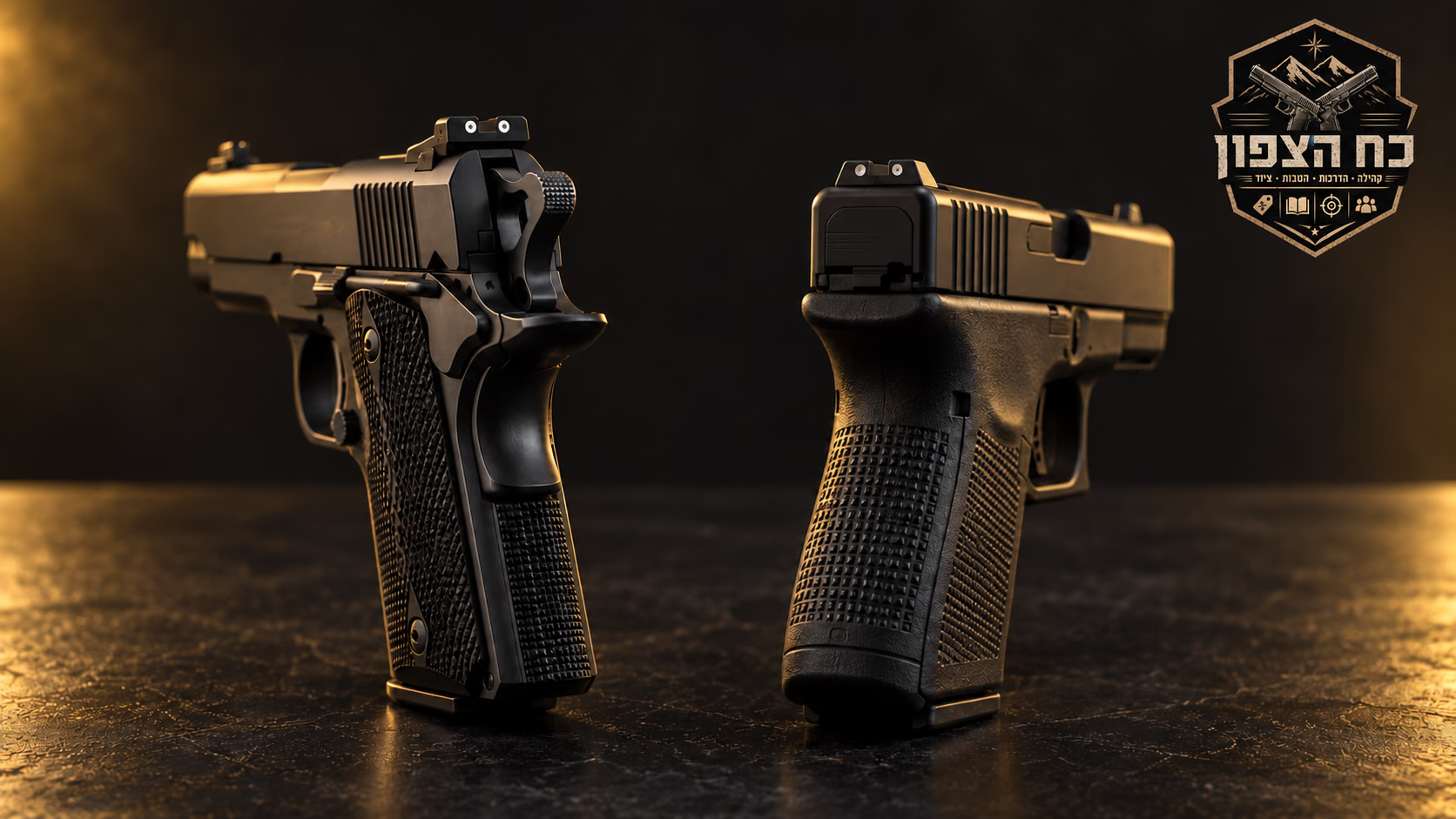
Hammer-Fired or Striker-Fired — What Is the Difference Between Common Handgun Actions?
A professional comparison of hammer-fired and striker-fired pistols, focusing on operating feel, consistency, maintenance and training.
Read more
Handgun Glossary — The Complete Guide for Firearm Licence Holders
Barrel, slide, grip, magazine, and front and rear sights: a clear glossary that helps identify parts, read manufacturers' instructions and communicate precisely with professionals.
Read more
Single Action, Double Action and Striker-Fired — How Does a Pistol's Action Work?
A clear guide to the differences between common action types, what they mean for responsible use and the questions worth asking before choosing a firearm and training with it.
Read moreReady to grow?
Schedule a Call