

Small Battery, Big Responsibility: Organising Electronic Equipment
How to manage batteries for equipment without relying on guesswork: manufacturers' instructions, precise identification, separation and replacement records.
Content credit: Dor Ben Hamo — Shooting Instructor
Credit: Koach Hatzafon — original article illustration
Correct matching, storage and simple records can prevent confusion with flashlights and other electronic equipment.
A quality flashlight and advanced electronic equipment still depend on one small detail that is easy to forget: their power source. Confusion begins when several devices use batteries that look similar, some rechargeable and some not, while spare batteries accumulate in a bag with no clear record of when they were purchased. The solution does not require a complex system. It starts with accurate identification and a routine that can be maintained.
This article concerns the management and safety of batteries in ancillary equipment. It does not propose electrical modifications, cell repairs or installation instructions for an accessory attached to a firearm.
The Model Determines the Battery
Before purchasing or replacing a battery, open the device instructions and check the permitted type, voltage and whether the cell is rechargeable or disposable. A battery that physically fits the compartment is not sufficient confirmation. If you cannot find clear instructions for the exact model, check with the manufacturer or importer before trying an alternative.
In its lithium-battery safety notice, Streamlight warns, among other things, against mixing new and used batteries or different brands, and against charging batteries not designed to be recharged. Read this guidance together with the instructions for the specific product. Streamlight lithium-battery safety notice.
Create a Short Equipment List
Create a note on your phone with one line for each device: model, approved battery type, date of replacement or charging, and a link to the instructions. If you have several similar products at home, add a description that distinguishes them. The goal is to avoid saying, “I think this is the right battery.”
There is no need to record data that will not be used. Reliable information for three devices is better than a detailed spreadsheet that is never updated. Note where the spare batteries are stored as well, so you do not have to search several bags at the last minute.
Organise the Spares
Spare batteries should be kept in their packaging or in a suitable container that protects the contacts, separately from metal objects. Do not leave loose cells with keys or coins. Manufacturers' guidance also emphasises avoiding short circuits and battery damage. Streamlight safety notice.
For organisation, clearly separate new stock, rechargeable batteries that are ready for use and items awaiting disposal. One box labelled “all batteries” shifts the identification task to the moment when the equipment is needed. Retain the original details on the packaging so that its contents can be identified.
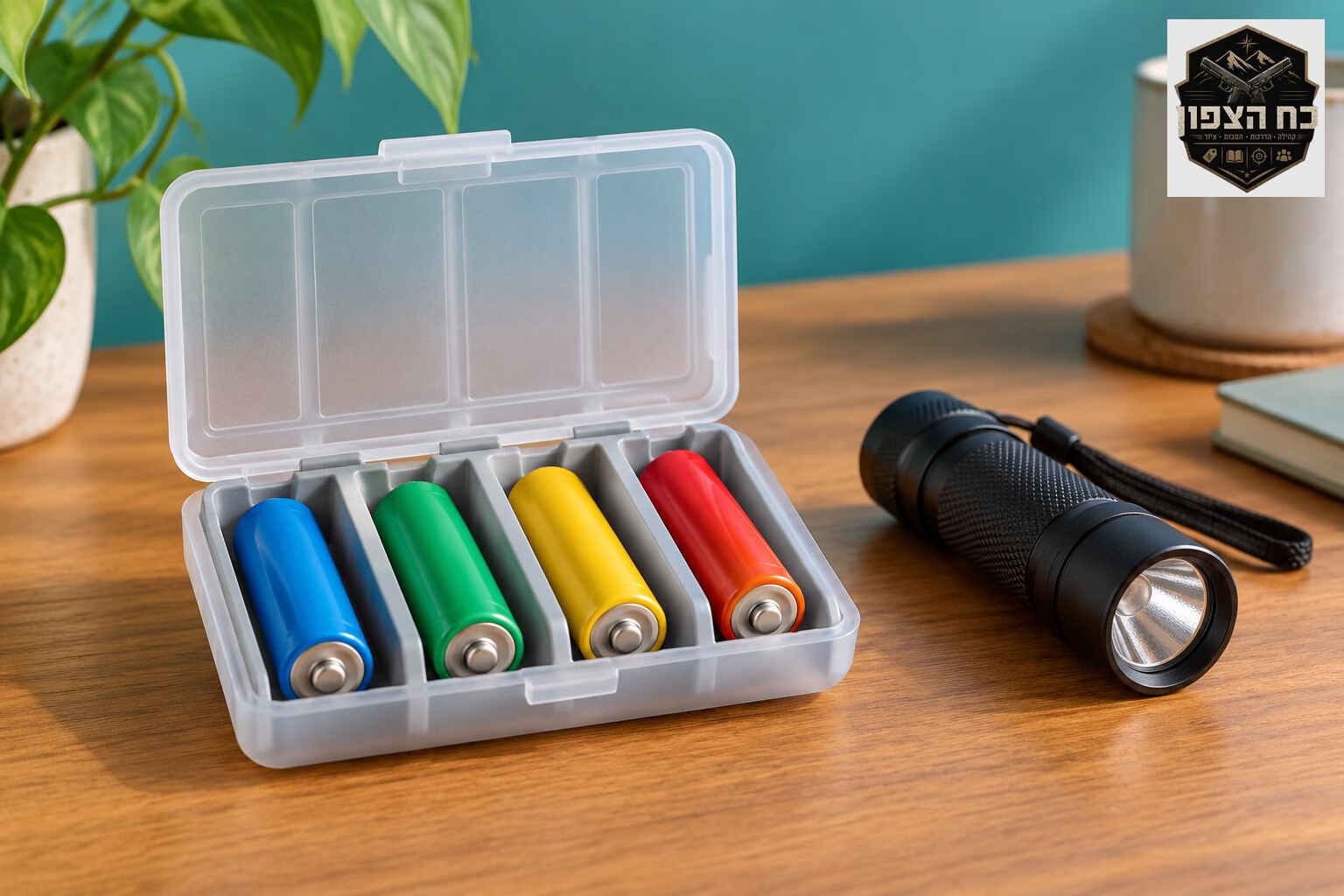
Separate insulating compartments help protect battery terminals. Illustrative image.
A Replacement Date Does Not Guarantee Run Time
This article does not set a universal replacement interval. Operating time depends on the device, battery and manner of use, so a marketed number of hours should not be taken as a prediction of your own result. Schedule checks according to the manufacturer's instructions and your equipment routine, and record unusual changes that you can describe to the service provider.
If you notice leakage, swelling, unusual heat or visible damage, stop using the battery and consult the manufacturer's guidance and an appropriate disposal route. Do not attempt to return a damaged battery to service through a home repair. Manufacturer information about handling batteries and devices damaged by leakage is available here: Streamlight — battery information.
An Example of a Sustainable Routine
Before a planned outing, review the equipment list, check each item's condition in accordance with its instructions, and make sure that spare batteries are identified and stored correctly. After use, update only what has changed. If a device behaved unusually, record when and under what circumstances instead of relying on memory.
Three useful questions: Do I know with certainty which battery is permitted in each device? Can I distinguish between the spare batteries? Do I have instructions and a service contact to consult when in doubt?
This kind of organisation does not guarantee that a device will never fail. It helps identify uncertainty early, reduce mistakes and approach use with a clearer understanding of the equipment's condition.
This content is intended for general information and does not replace certified instruction, manufacturers' instructions, official guidance or relevant professional advice.
Written by
dor-ben-hamo
Related posts
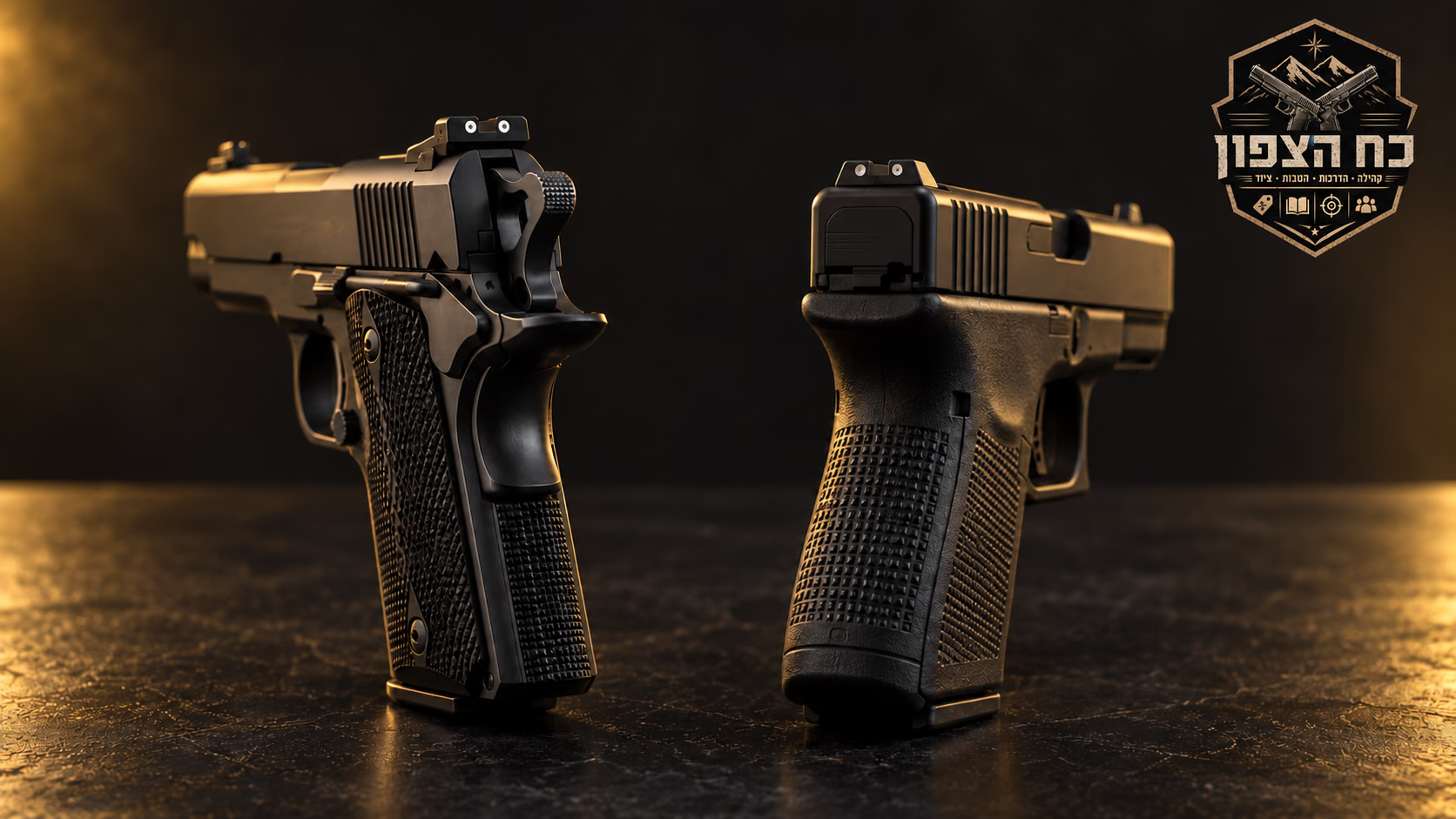
Hammer-Fired or Striker-Fired — What Is the Difference Between Common Handgun Actions?
A professional comparison of hammer-fired and striker-fired pistols, focusing on operating feel, consistency, maintenance and training.
Read more
Handgun Glossary — The Complete Guide for Firearm Licence Holders
Barrel, slide, grip, magazine, and front and rear sights: a clear glossary that helps identify parts, read manufacturers' instructions and communicate precisely with professionals.
Read more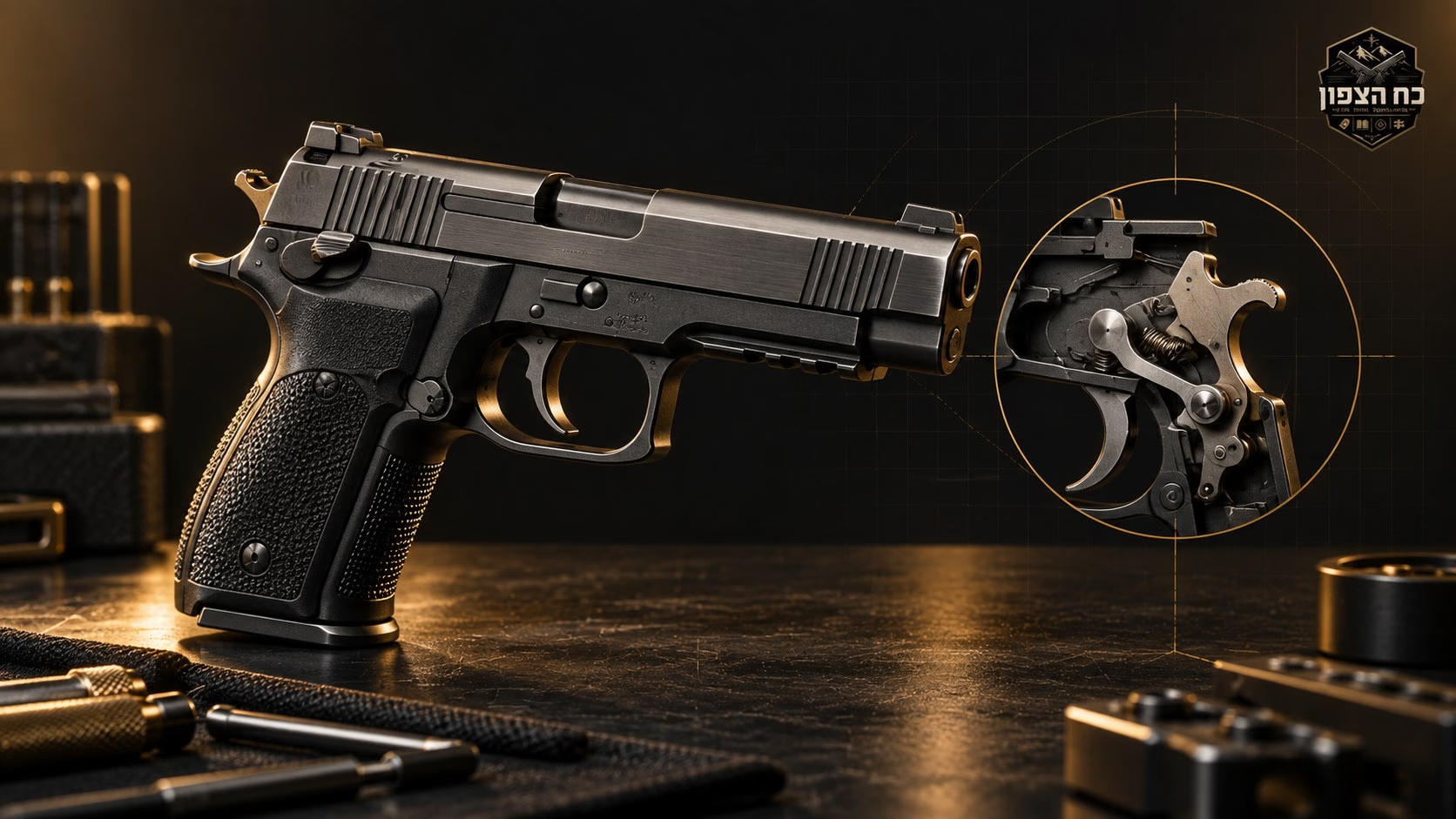
Single Action, Double Action and Striker-Fired — How Does a Pistol's Action Work?
A clear guide to the differences between common action types, what they mean for responsible use and the questions worth asking before choosing a firearm and training with it.
Read moreReady to grow?
Schedule a Call